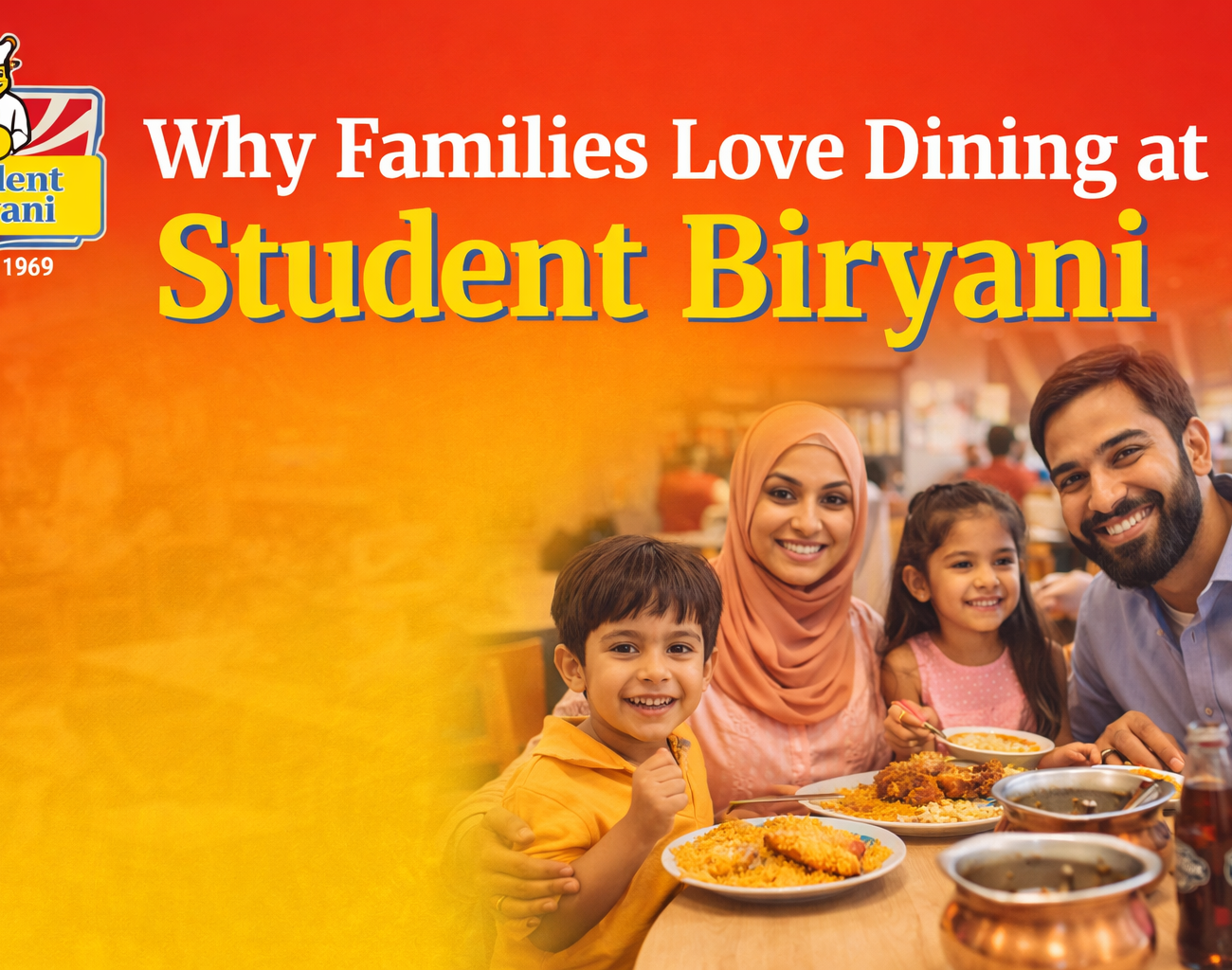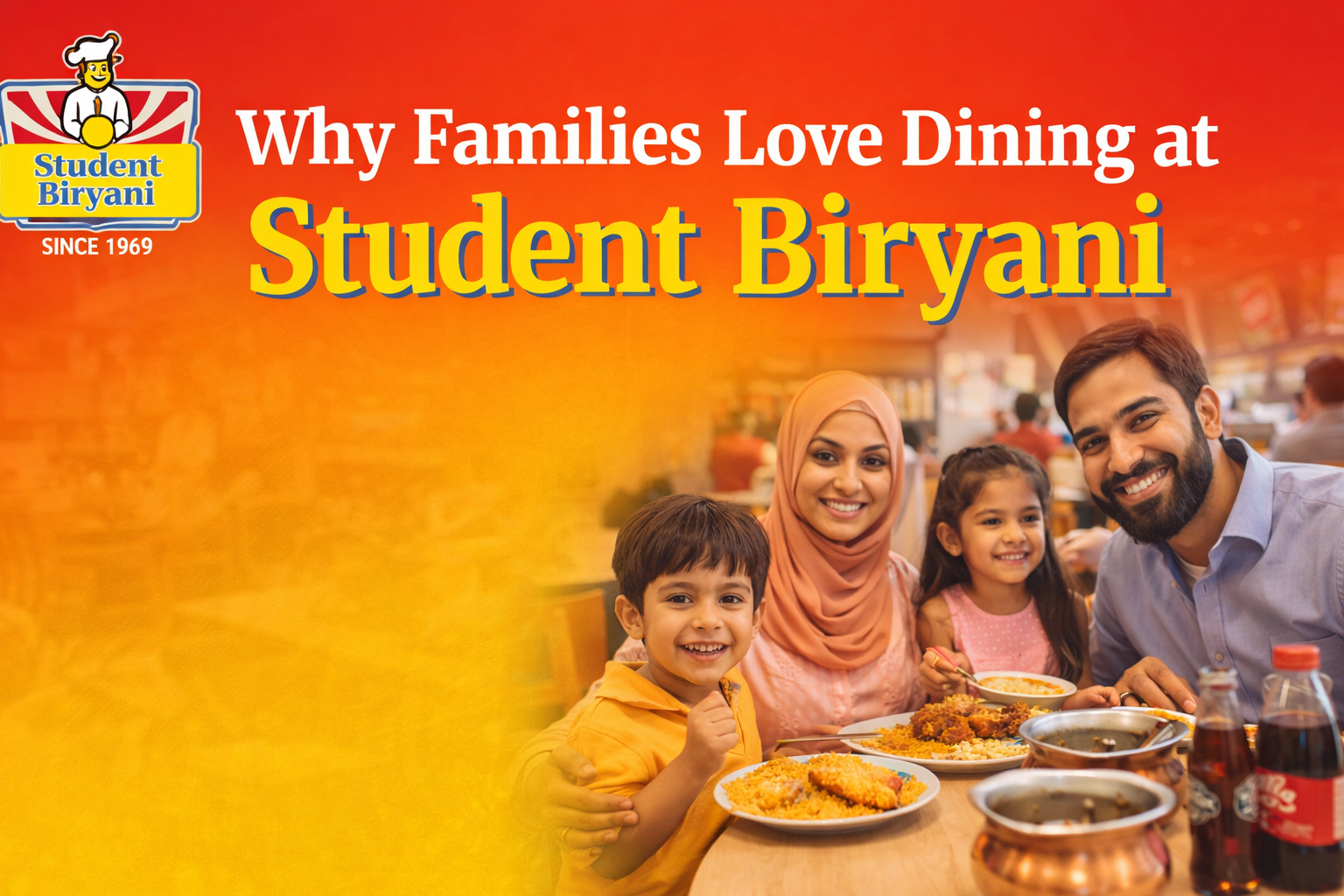
We Design Family Dining Before We Think About Dishes
Families don’t arrive at the table with one decision in mind. Meals are negotiated; preferences overlap, and time matters more than presentation. That’s why families love dining at Student Biryani when the experience feels settled from the start and no one has to adjust expectations halfway through the meal.
From our side, family dining depends on control rather than excitement; food needs to arrive as expected, service must stay out of the conversation, and the table should settle quickly. When that happens, the meal fits into routine without effort.
How Families Get Together on a Eatery
Family dining follows patterns. Once you’ve seen enough tables, you stop guessing and start noticing what repeats. Families don’t arrive as one unit; they arrive as a mix of ages, appetites, and expectations, and the meal has to hold that mix together without friction. What matters most isn’t excitement, but ease.
In our experience, family meals usually come with a few shared realities:
- Different age groups at the same table
Children lean toward familiarity, while elders value balance and restraint. Meals work when neither side feels overlooked.
- Varied preferences within one order
Some want rice-led dishes, others prefer bread and curries. A family meal fails when the menu forces everyone into the same choice.
- Decision fatigue before the food even arrives
Families don’t want to negotiate every detail. They look for meals that feel safe to agree on quickly.
This is where comfort and consistency become essential. When food behaves the way families expect it to, conversations flow, plates are shared naturally, and the meal settles into its rhythm. That’s how Pakistani family dining has always worked, and those expectations travel with families wherever they go.
Operational Decisions that are Centered Around Families
Portions That Assume Sharing:
Families don’t eat in straight lines. Plates move. Servings overlap. We portion food knowing it will be shared, not guarded. Rice needs to stay intact after the first serve. Curries can’t thin out once they travel across plates. When portions are set correctly, families don’t pause the meal to fix it.
Consistency Is Controlled, Not Claimed:
Consistency isn’t a promise. It’s enforced. Recipes are fixed. Prep steps don’t change by shift or by day. When families order different dishes together, inconsistency shows immediately. One uneven plate disrupts the entire table. That’s why variation is managed before food reaches service.
Reliability Across Mixed Orders:
Family tables rarely order one type of dish. Rice, bread, and curries arrive together or the meal feels broken. Timing matters more than speed. Dishes are sequenced so nothing waits too long and nothing arrives early. When coordination works, the table stays focused on eating instead of watching the kitchen.
Seating That Allows Movement:
Families adjust constantly. Seats shift. Plates pass. Space needs to allow that without friction. Seating and table flow are handled with function in mind. When movement feels natural, meals feel relaxed. When it doesn’t, everyone notices.
Variety Without Strain:
Families expect choice, but not chaos. Variety is controlled so preferences are covered without stressing preparation. The core stays stable. Extras don’t interrupt flow. This keeps decisions simple for families and execution steady for the kitchen.
Why Families Return Without Reconsideration
Families don’t revisit places out of loyalty. They return because the decision feels easy the second time. No recalculation. No discussion about alternatives. The meal already fits into their routine.
We see this pattern clearly at Student Biryani. Return visits don’t come from excitement. They come from predictability. When a family knows how the meal will unfold, they don’t feel the need to search again.
A few traits usually explain that quiet return:
- The food behaves the same way each visit
Flavors don’t shift. Portions don’t surprise. What worked last time works again.
- Ordering feels familiar, not risky
Families don’t hesitate. They already know what fits the table.
- The meal doesn’t interrupt conversation
Timing holds. Nothing arrives late enough to break the flow.
- No one at the table feels out of place
Different preferences coexist without adjustment or compromise.
Over time, this reliability turns dining into habit. And once a place becomes part of a family’s routine, reconsideration stops being necessary. The decision has already been made.
A Dining Experience Built on Quiet Confidence
Family dining doesn’t need emphasis or explanation. When it’s done properly, it speaks for itself. Our focus remains on maintaining that balance between variety and consistency, comfort and quality, choice and simplicity. Everything else follows naturally. For those who want to understand how we approach food and dining as a whole, our broader philosophy is reflected throughout the Student Biryani experience, where meals are built to feel dependable long before they’re remembered.
Looking for more menu choices for Ramadan?
Chat With Us on WhatsApp to Place Your Iftar Order