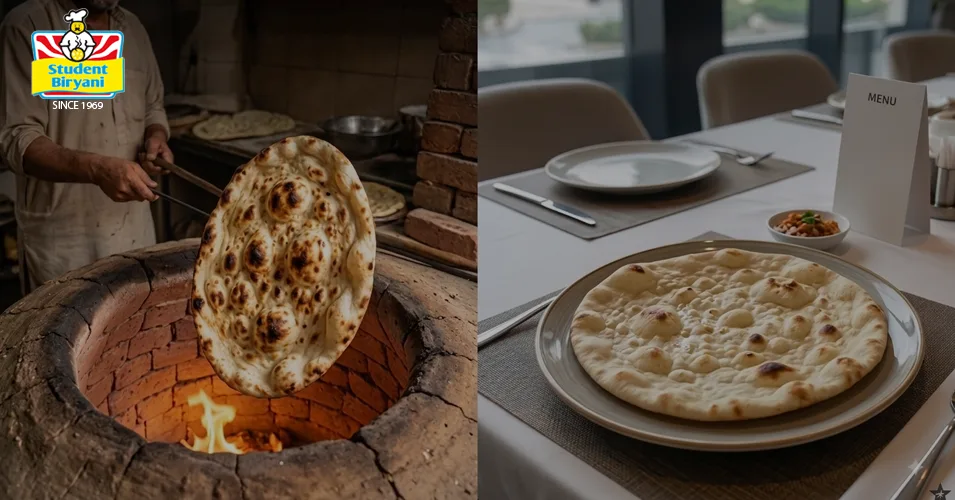
The tandoor is usually working before the dining room fills. Dough rests nearby under cloth. Someone shapes it by hand, presses it flat, then lifts it toward the heat.
Clay ovens do not forgive shortcuts. Bread either cooks properly or it doesn’t.
Across Abu Dhabi and Dubai, diners who care about traditional Pakistani food often notice bread first. Texture gives everything away. Soft center, slight char at the edge, steam escaping when torn.
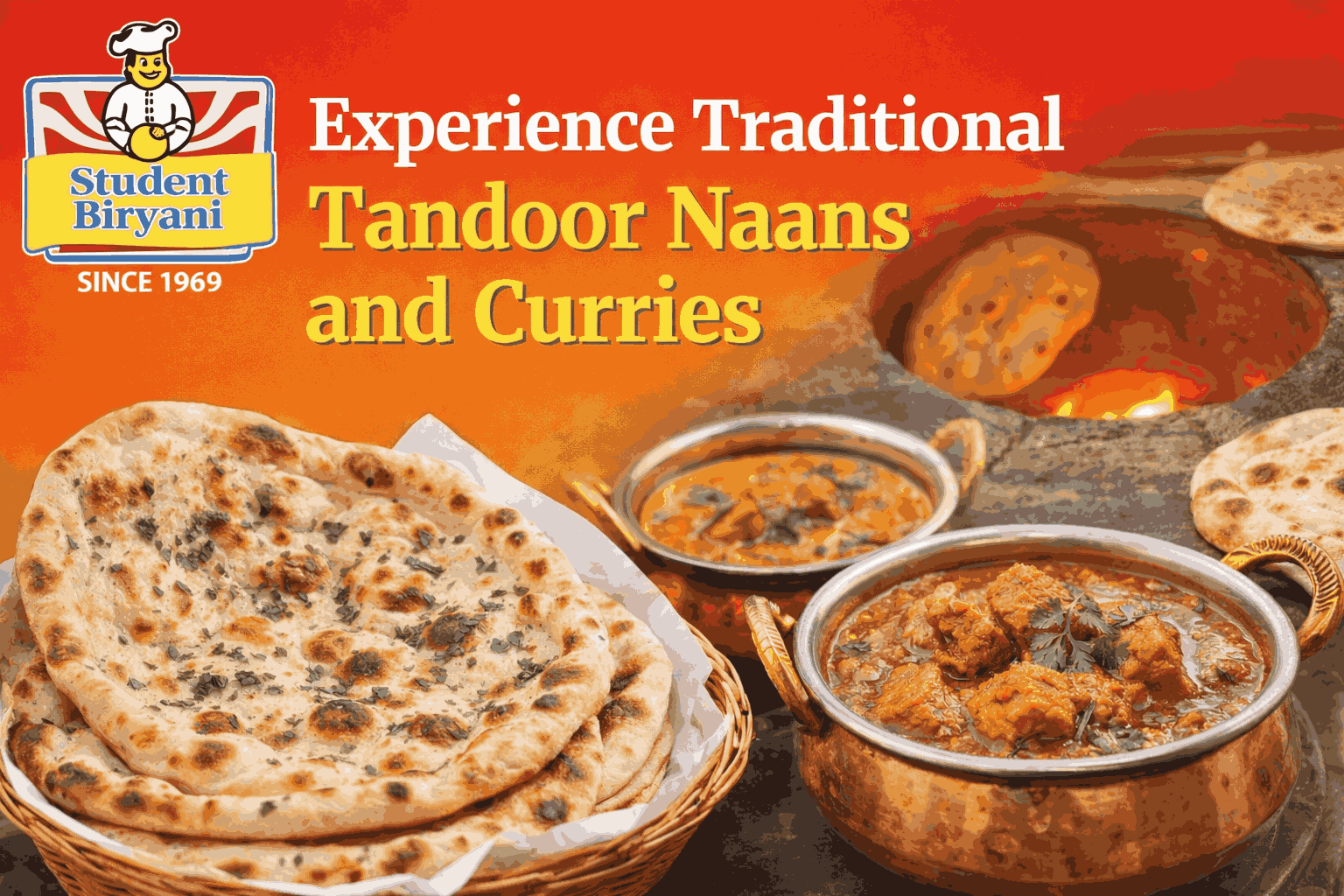
Experience traditional tandoor naans and curries begins there, not with the gravy.
Bread That Comes Straight from the Clay Oven
Naan behaves differently when baked against clay.
The dough stretches by hand, not machine-rolled. It sticks briefly to the inner wall of the oven, cooking fast under direct heat. Small blisters form on the surface. Edges darken slightly.
Common variations usually include:
- Plain naan for neutral pairing
- Butter naan brushed lightly after baking
- Garlic naan with chopped garlic pressed into the surface before heat
Bread should fold without cracking. Reheated naan stiffens quickly; fresh naan bends easily.
Timing matters more than garnish.
Curries That Depend on Reduction, Not Rush
Bread carries flavor, but curries build it.
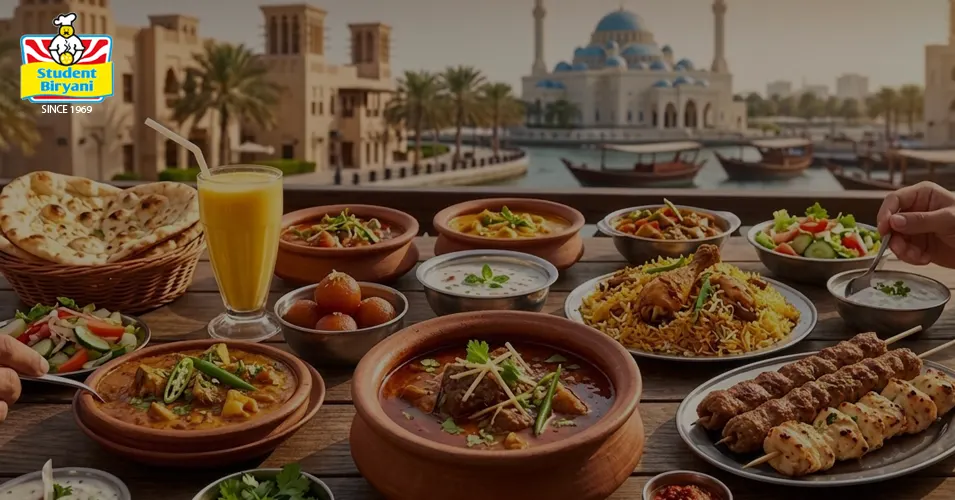
Karahi reduces in a wide pan until masala thickens and oil rises gently to the top. Nihari simmers for hours before service, marrow settling into the gravy. Other curry preparations rely on tempering spices early so aroma moves into the base rather than sitting raw.
Texture tells the story:
- Gravy should coat naan without dripping excessively
- Oil separation should look natural, not heavy
- Meat should break apart under pressure without falling into strands
When bread and curry meet, balance becomes obvious.
Pairing Naan with the Right Curry
Not every curry behaves the same way with bread.
Heavier gravies such as nihari or paya often pair well with plain naan, allowing the curry to dominate. Karahi works easily with garlic naan, since sharper masala stands up to added flavor.
Families ordering collectively usually follow a simple rhythm:
- One or two curries
- Multiple rounds of naan
- Refills as needed
Bread disappears faster than expected.
A Familiar Craft Across the UAE
Traditional tandoor naan UAE diners look for often reflects technique rather than presentation. The same applies to authentic Pakistani curries UAE residents prefer.
In cities like Abu Dhabi and Dubai, steady preparation builds recognition. Clay ovens, long simmering, balanced spice layering.
At Student Biryani, tandoor and curry preparation follow established methods instead of convenience shortcuts.
Repetition builds trust.
Heat, Dough, and Time
Experience traditional tandoor naans and curries long enough and patterns become clear. Bread softens as it cools. Gravy thickens as it rests. Flavor deepens after a few minutes on the table.
Some dishes impress immediately. Others reward patience.
Clay heat, slow reduction, steady timing. That combination rarely needs reinvention.
Looking for more menu choices for Ramadan?
Chat With Us on WhatsApp to Place Your Iftar Order