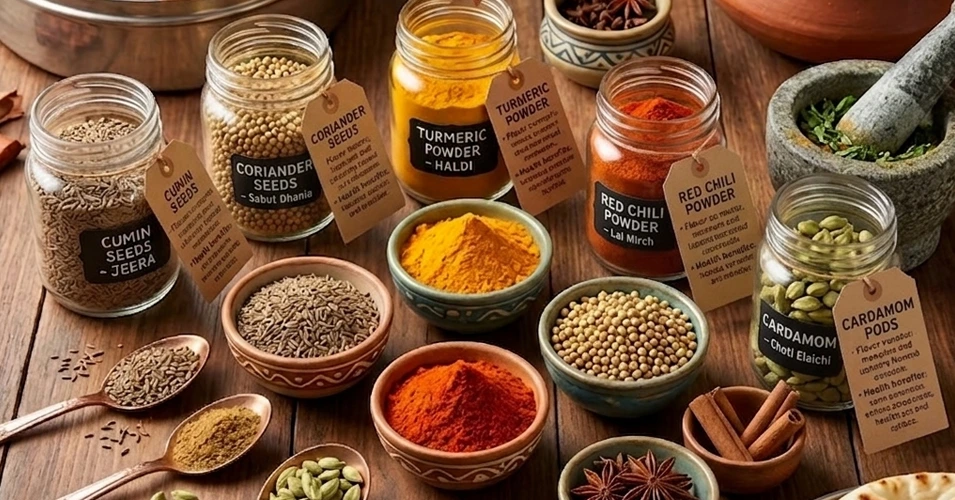
Spices rarely go into a pot all at once. The order changes the result, sometimes more than the quantity. A dish can use the same ingredients and still turn out differently if the sequence shifts.
At Student Biryani, that sequencing stays consistent. Spices are added in stages, not mixed together at the start, which allows each layer to settle before the next one builds on it.
How Spices Are Used in Cooking
Spices rarely go in all at once. The order builds itself as the cooking moves forward. Heat comes first, then the base begins to form, and spices follow that rhythm.
A pan usually starts with oil and whole spices. Once aroma rises, onions or tomatoes go in, and ground spices follow after the base softens. Adding them too early can burn the surface. Adding them too late leaves them sitting on top instead of blending in.
Cooking becomes a matter of timing rather than measurement. A few seconds too soon or too late changes how the spice settles. The goal is not to make each spice noticeable, but to let everything come together without one part standing apart.
Core Spices in the Base Layer
Cooking usually starts once oil heats and the first ground spices meet the surface. From that point, the base either holds together or falls apart.
- Turmeric → goes in early and settles into the oil; supports color while preventing raw edges in the gravy
- Red chili powder → blends into the base rather than sitting on top; controls heat without turning harsh
- Coriander powder → absorbs moisture and gives the gravy body; keeps spices from separating
- Cumin powder → releases a warm note that stays present from start to finish
Each spice works through contact with heat and oil, not in isolation. Balance comes from how evenly the base develops during those first few minutes.
Whole Spices in the Initial Cooking Stage
Whole spices go into hot oil at the start, where heat releases essential oils before onions or liquids are added. That step sets the base and determines how aroma travels through the dish.
- Bay leaf → provides a subtle background layer that supports the gravy without drawing attention
- Cinnamon stick → adds steady warmth that blends into the base rather than standing apart
- Cloves → carry a concentrated note; even a small quantity shifts the balance noticeably
- Green cardamom → opens under heat and contributes a light aromatic lift
Whole spices shape the foundation early in the process, then fade into the dish as cooking continues, leaving structure rather than a separate taste.
Finishing Spices That Adjust the Flavor
Some spices appear near the end, once the dish has already taken shape.
Garam masala is often added at this stage. It does not build the base but adjusts the final balance. Fresh herbs may follow, not as decoration, but to slightly lift the dish before serving.
Late additions do not change the structure. They refine what is already there.
Why Balance Matters More Than Quantity
Adding more spice does not improve the dish. Each element needs to sit within a range where it supports the others rather than standing out.
Too much heat can mask the base. Too little leaves the dish flat. The balance depends on how spices are layered, not how many are used.
Flavor That Builds in Stages
Spices do not work alone. They depend on timing, heat, and sequence to come together as a single result.
At Student Biryani, that structure remains consistent, allowing each dish to develop in the same way every time.