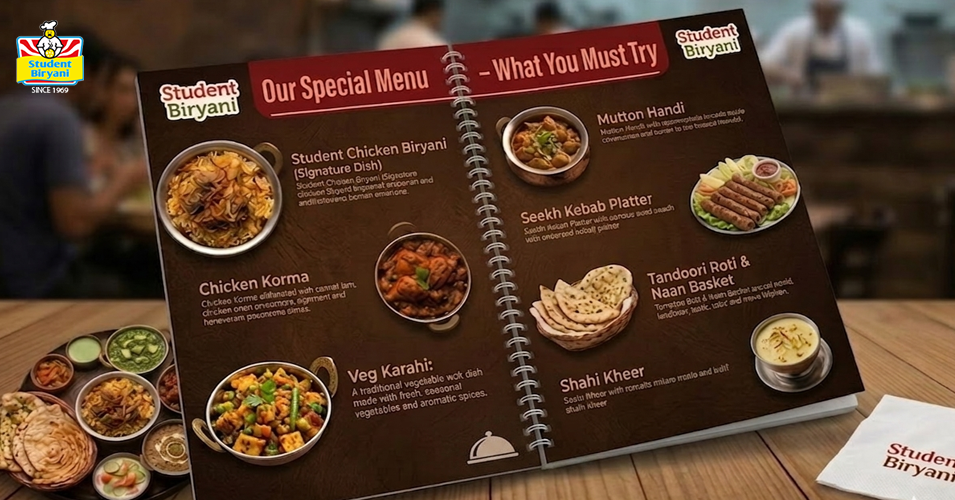
Menus tend to look manageable until the moment comes to order. A few items stand out, then more get added, and the table starts negotiating what should come first. The decision rarely stays with one person.
At Student Biryani, that moment usually shifts toward familiar choices. Not because the menu is limited, but because certain dishes settle the table faster than others.
How People Usually Decide What to Order
Orders often begin with something everyone agrees on. One dish that can hold the table before anything else arrives.
After that, the pattern changes. Someone suggests adding a second item, another asks for something from the grill, and the order expands without being fully planned. The table builds in steps rather than all at once.
Dishes That Tend to Be Ordered First
Biryani usually comes first. It reaches the table as a complete meal, not something that needs support. Plates form around it without much adjustment.
Karahi follows when the table wants something warmer and slower. It does not replace the first dish but sits alongside it, changing how the meal moves.
Handi takes a slightly different position. The texture is smoother, often chosen when the table prefers something less intense but still substantial.
What Gets Added After the First Order
The first dish rarely completes the table. Once plates are partly filled, attention shifts back to the menu, not for a full reorder, but for small additions that change how the meal feels.
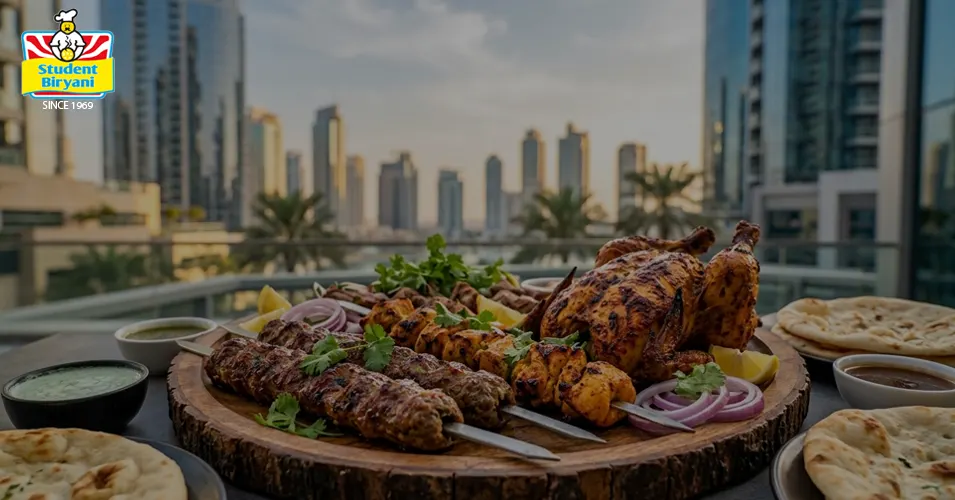
- BBQ items → picked gradually, not served as a full portion per person
- Raita or salad → offsets heavier dishes without replacing anything
- A second curry → comes in when one dish starts running low too early
- Drinks → usually arrive midway, once the meal has already started
These additions do not interrupt the meal. They settle around what is already on the table, adjusting the balance rather than changing its direction.
How the Table Builds Over Time
desi table rarely forms in one go. It moves in stages, and the order of arrival shapes how people eat.
The first dish settles the table. Plates are filled, and conversation slows slightly while everyone starts eating. The second dish changes direction, pulling attention back to the center. After that, the meal becomes less structured.
People begin to move between dishes instead of finishing one before starting another. Someone returns to the biryani, another shifts toward karahi, while BBQ gets picked in between without following any sequence.
By the end, the table looks different from how it started. Some dishes are nearly finished, others remain partially untouched, and the meal closes without a clear endpoint.
A Meal That Finds Its Own Balance
No single dish defines the table. The combination settles over time, shaped by what arrives and how people choose to eat.
At Student Biryani, that balance forms naturally, without needing to plan the entire meal in advance.