Why Biryani Never Stayed the Same across South Asia
Anyone who has eaten biryani across different parts of South Asia notices the shift almost immediately. The rice changes first. In some regions, it stays light and separate; elsewhere, the masala works deeper into the grains and leaves more color behind the moment the plate is opened.
Even the aroma behaves differently from one city to another.
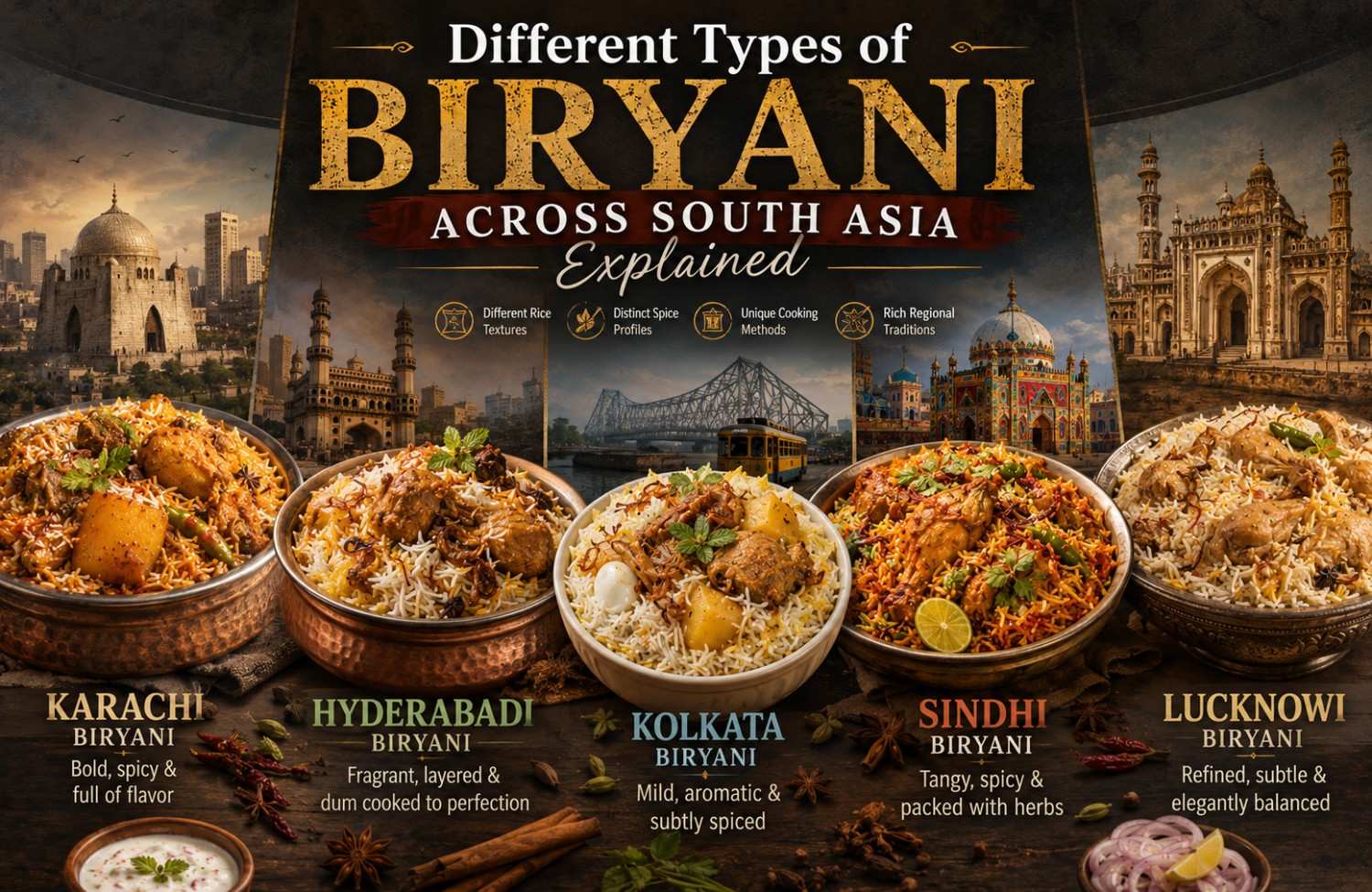
A Karachi-style biryani usually reaches the table sharper and heavier on spice. Lucknowi versions tend to hold back at first. Kolkata biryani often feels lighter altogether, while Sindhi styles push masala, herbs, and heat much more openly into the rice. These differences didn’t appear randomly over time. They came from local eating habits, available ingredients, cooking pace, and the kinds of meals families expected to sit down to.
That’s why South Asian biryani never settled into one fixed style. The dish moved across regions, but people kept cooking it according to their own palate, climate, and food culture.
How Rice, Spice, and Cooking Method Change the Entire Dish
Most biryani styles separate themselves long before serving. The differences usually begin with structure rather than ingredients.
A few things shape the final result more than people realize:
- Rice texture
Some regions prefer long, dry grains where every layer stays separate. Others allow slightly softer rice that absorbs more moisture and spice.
- Spice behavior
Certain biryanis push chili and acidity forward immediately. Others rely more on whole spices and slower aroma release.
- Layering style
In many traditional dum preparations, rice and meat cook together in sealed layers. Other styles combine elements earlier, creating a more blended texture.
- Moisture level
A Karachi-style biryani often carries more masala through the rice itself. Lucknowi styles usually stay lighter and more restrained.
- Meat preparation
Some marinades are aggressive and spice-heavy. Others are built to preserve the flavor of the meat first.
Small adjustments in any of these areas can change the personality of the entire dish.
Regional Biryani Styles across South Asia
Karachi Biryani
In Karachi, biryani usually arrives louder than people expect. The masala sits deeper in the rice, and the spice doesn’t wait long before showing itself. You notice it immediately, especially when the potatoes start absorbing the gravy around them. That part matters more than outsiders think. In many Karachi servings, the potato is carrying almost as much flavor responsibility as the meat.
The rice rarely stays pale for long.
Families here also tend to serve biryani heavily. Large trays. Strong masala. Sharper heat. The style grew comfortably alongside fast city eating and busy commercial areas where lighter food rarely held attention for long.
Hyderabadi Biryani
Hyderabadi biryani behaves differently once the lid opens. The layers stay clearer. Rice, meat, and masala don’t collapse into each other immediately, which is why dum cooking holds so much importance in this style.
You spend more time noticing aroma before heat.
Some versions stay surprisingly restrained at first, then build slowly halfway through the plate. That pacing is part of what separates it from sharper South Asian styles.
Kolkata Biryani
Kolkata biryani pulls in the opposite direction entirely. The spice level usually softens, and the potato becomes central rather than secondary. Even people unfamiliar with the region notice the difference quickly because the rice feels lighter and less aggressive overall.
It’s one of the few biryani styles where aroma often arrives before masala.
Sindhi Biryani
Sindhi biryani rarely tries to stay subtle. Sour notes, visible masala, herbs, chilies; everything pushes forward more openly. The rice carries more color, and the plate usually feels fuller from the beginning.
This is also one of the styles where the spice can continue building instead of leveling out.
Lucknowi Biryani
Lucknowi biryani takes a quieter approach. The seasoning stays controlled, and individual elements remain easier to separate while eating. Nothing rushes forward too quickly.
Some people used to stronger biryanis mistake that restraint for lightness at first. Usually they change their mind by the second or third bite.
Why Some Biryani Styles Feel Heavier or Sharper Than Others
People often describe biryani using broad words like spicy, rich, or fragrant, but those differences usually come from structure rather than heat alone.
Oil levels matter. So does moisture.
A biryani with heavier masala coating the rice will naturally feel denser and sharper during the meal. Styles that separate rice more cleanly tend to feel lighter, even when the spice blend itself is complex.
Acidity changes things too. Tomatoes, yogurt, dried plums, and lemon each shift how the spice lands on the palate. Some regional styles rely on these contrasts heavily. Others avoid them almost entirely.
Then there’s aroma. Whole spices released slowly through dum cooking behave very differently from aggressively mixed masalas. One expands gradually while eating; the other announces itself immediately.
Neither approach is wrong. They simply come from different regional expectations.
Why Regional Identity Still Shapes Biryani Today
People rarely describe biryani in technical terms while eating it. They usually compare it to a place. Karachi-style. Hyderabadi. Sindhi. Kolkata. The identification happens almost automatically, often before anyone starts discussing ingredients or cooking methods.
That recognition still matters across South Asia because regional food habits never disappeared. Families carried them into new cities, new countries, and newer kitchens. Some still expect stronger masala in the rice. Others notice immediately when the aroma feels too sharp or the layering too heavy.
Even now, biryani is one of the few dishes people associate with regions before recipes. At Student Biryani, that connection remains part of how we understand Pakistani biryani itself; not as a fixed formula, but as a style shaped continuously by the people who cook it and the regions that continue eating it differently.