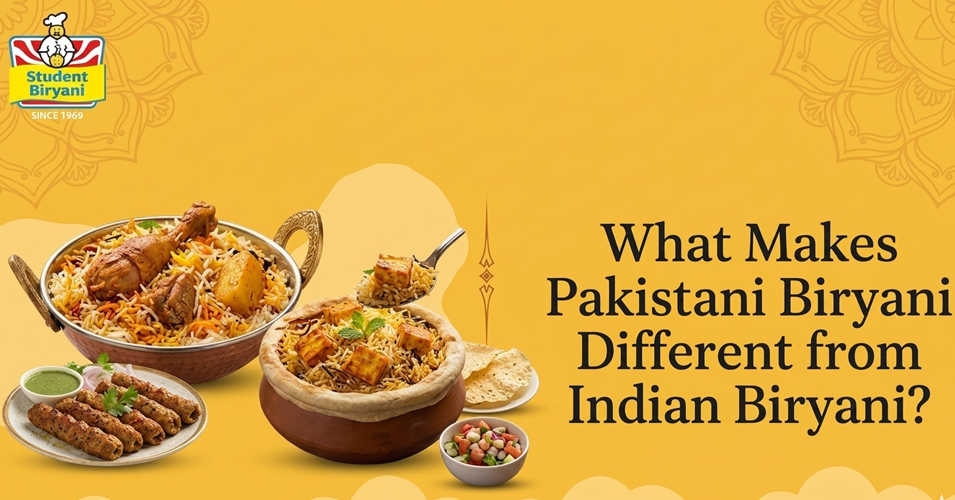
Why Pakistani and Indian Biryani Never Evolved the Same Way
People usually recognize the difference between Pakistani and Indian biryani before they start describing it properly. Sometimes it’s the aroma. Sometimes the color of the rice gives it away first. In other cases, the masala reaches the table heavier and sharper long before the first bite.
The styles separated gradually because eating habits separated too.
Across South Asia, biryani kept adapting to local spice preferences, cooking pace, and the way families served large meals at home. Some regions pushed the masala deeper into the rice and expected stronger heat throughout the plate. Others focused more on layering, aroma, and slower spice development while eating.
Even today, the two styles rarely behave the same way once the serving spoon reaches the bottom of the pot.
How Rice, Masala, and Spice Behave Differently
The biggest difference usually appears in the rice itself. In many Pakistani biryani styles, the grains absorb more masala during cooking, so the flavor spreads deeper through the serving instead of sitting mainly around the meat.
That changes the entire plate.
In several Indian styles, especially dum-based preparations, the layers often stay more separated. The rice carries aroma and spice differently from the masala underneath, which creates a slower shift in flavor while eating.
Some noticeable differences appear repeatedly:
- Masala distribution
Pakistani biryani often coats the rice more aggressively, especially in Karachi and Sindhi styles where the masala settles deeper into the pot. - Spice pacing
Certain Indian biryanis build gradually instead of arriving sharp from the first bite. - Moisture level
Pakistani servings usually carry slightly heavier masala through the rice, while some Indian styles leave the grains drier and more individually defined. - Aroma behavior
Whole spices and steam layering tend to stand out more clearly in lighter dum preparations.
Not every serving follows the same pattern exactly, but experienced diners usually notice these differences quickly.
Why Pakistani Biryani Often Feels Sharper and Heavier
Pakistani biryani rarely tries to stay subtle for long. The masala moves deeper into the rice, and the spice usually reaches the palate earlier instead of building slowly over time. Karachi and Sindhi styles especially push stronger layering into the serving, which changes the way the meal feels from the first few bites.
The rice carries more responsibility here.
In many Pakistani preparations, flavor is not concentrated around isolated pockets of meat or gravy. The rice itself absorbs stock, oil, masala, and steam more directly during cooking, which is why even simpler servings can still feel full and intense across the plate.
You notice it more clearly at large family tables. The upper layer may taste lighter at first, but once the serving spoon reaches deeper into the pot, the masala becomes heavier, darker, and sharper almost immediately.
That progression is part of the experience, not an inconsistency in the cooking.
Acidity also plays a bigger role in many Pakistani styles. Tomatoes, yogurt, dried plums, green chilies, and herbs push the spice forward differently and give the biryani a more direct finish while eating.
Some people describe it as heavier. Usually they mean the flavor stays with the meal longer.
Why Some Indian Biryani Styles Feel More Layered or Restrained
Not every Indian biryani aims for the same intensity. Hyderabadi styles can still carry strong spice, but the layering behaves differently once the lid opens. Rice and meat often remain more separated, so the meal develops in stages rather than arriving all at once.
Lucknowi biryani usually moves even further toward restraint. The seasoning stays controlled, and the aroma builds more quietly across the plate. You notice individual spices more clearly because the rice is not always carrying dense masala through every layer.
Kolkata biryani shifts again. Potatoes become more central, the spice softens, and the overall structure feels lighter compared to heavier Pakistani servings.
The contrast is not really about one style being stronger than the other. It comes from different expectations around balance, pacing, and how biryani is meant to settle during the meal.
Why People Recognize the Difference Before It’s Explained
Most experienced diners do not need a full explanation to recognize whether a biryani leans more Pakistani or Indian once the plate reaches the table. The rice usually signals it first. Sometimes the aroma does. In other cases, the masala underneath gives it away as soon as the serving spoon moves deeper into the pot.
Those differences stayed visible because regional cooking habits stayed visible too.
At Student Biryani, Pakistani biryani is still understood through that same structure; deeper masala absorption, stronger rice character, and a style of serving where the flavor continues changing across the plate instead of staying uniform from the first bite to the last.