Why Biryani Aroma Feels Different From Other Rice Dishes
Biryani usually announces itself before it reaches the table. The smell rises differently from ordinary rice because the spices don’t sit in one layer or go in all at once. Steam, oil, rice, and masala keep trading flavor the whole time the pot is under heat.
That gradual exchange matters more than how many spices go in.
In dum-style cooking especially, whole spices release slowly into the rice rather than disappearing into the gravy straight away. Some notes stay sharp near the surface. Others settle deeper and only show up later while eating. It’s part of why biryani rarely tastes flat from the first bite to the last.
Core Spices That Build the Foundation of Biryani
Most biryani spices aren’t trying to dominate the dish on their own. Their job is structural. Some build warmth underneath the rice. Others shape aroma through steam. A few help the masala settle properly during cooking.
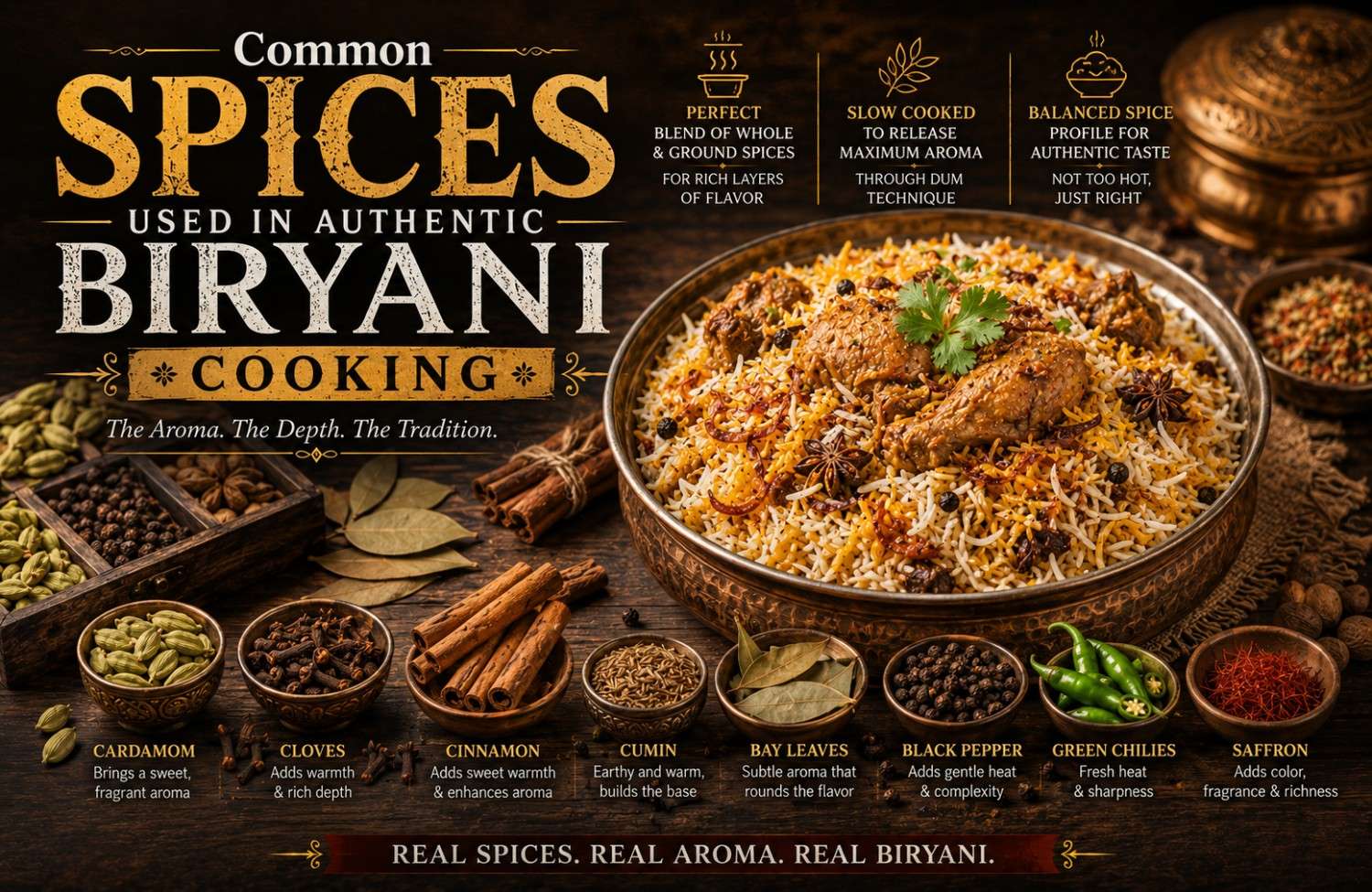
Cardamom lifts the aroma early, especially once the lid comes off. Green cardamom works more through fragrance than heat, which is why even a small amount becomes noticeable fast in dum cooking.
Cloves add sharper warmth and deepen the masala underneath the rice. In heavier Pakistani styles, they tend to become more noticeable once the serving spoon reaches the deeper layers.
Cinnamon softens the spice structure slightly. It rounds out stronger masala combinations without pushing the dish toward sweet.
Cumin works close to the base of the flavor, quiet, supporting the rice while making the oil and masala feel fuller during cooking.
Bay leaves rarely stand out on their own, but they shape the background aroma that most people associate with traditional biryani.
Black pepper creates a slower warmth than green chilies do. It doesn’t hit sharply at first. It builds through the plate.
Not every biryani uses these in the same proportion. The balance shifts depending on the style, the masala structure, and how much the rice is expected to carry.
The Spices That Change Heat, Depth, and Color
Green chilies affect biryani differently from dried blends. The heat is fresher, more direct, and in Pakistani styles especially, the chilies cook down into the masala rather than resting lightly above it. You usually notice that sharpness early.
Saffron moves in the other direction. It changes aroma and color quietly, more so in lighter rice layers where steam has room to circulate. Some preparations barely use it. Others depend on it mainly for fragrance.
Nutmeg and mace are harder to identify while eating, but their absence shows. Without them the masala can start feeling flat, too forward. They bring a roundness and slowness to the spice structure that’s difficult to name but easy to miss.
Mace especially changes the aroma after the first few bites. Not every spice needs to announce itself.
Why Whole Spices Behave Differently During Dum Cooking
Once the pot stays sealed under dum heat long enough, whole spices start to change. Oil pulls flavor from them gradually while steam carries those aromas upward through the rice. It’s a slower process than open cooking because nothing releases all at once.
A clove near the bottom of the pot behaves differently from one sitting higher up. Same with cardamom, bay leaves, cinnamon sticks. Some aroma settles into the steam first. Some stays heavier inside the masala underneath. That separation is why biryani develops layers naturally during cooking rather than tasting like one blended mixture all the way through.
You notice it more once the serving spoon starts reaching deeper into the pot.
Why Spice Balance Matters More Than Spice Quantity
Strong biryani doesn’t come from more spices. In most authentic preparations, balance matters far more than intensity. Too much clove hardens the masala. Excess cardamom makes the aroma feel artificial. Heavy chili use without depth underneath tends to fade after the first few bites.
Good spice structure stays controlled even when the flavor feels bold.
At Student Biryani, Pakistani biryani is still approached this way. Spices layered gradually through rice, steam, and masala so the aroma keeps shifting naturally across the meal rather than overwhelming the plate all at once.