Ordering food rarely starts with a plan. The decision happens somewhere between hunger and convenience, often with a quick scan through options that all look similar at first.
At Student Biryani, that moment usually resolves faster. Not because the choice is pushed, but because the outcome feels predictable once the order is placed.
What Drives Quick Food Ordering Decisions in the UAE
Ordering usually starts with urgency, not curiosity. Hunger reaches a point where browsing feels like a delay rather than an option.
Several factors push the decision forward:
- Limited time to choose → short breaks or late hours reduce comparison
- Familiar dishes over new options → known meals feel safer when time is short
- Delivery expectations → slower kitchens are filtered out quickly
- Group decisions → orders settle faster when the menu covers multiple preferences
The choice rarely comes from exploring every option. It comes from recognizing a place that can deliver the expected meal without uncertainty.
Five Reasons That Actually Matter
- Food That Arrives as a Complete Meal
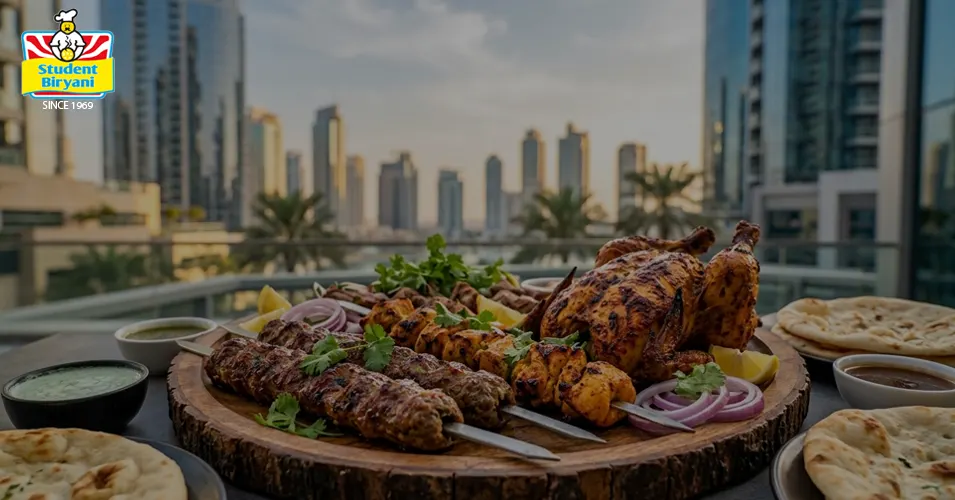
Somemeals require multiple items to feel finished. Others arrive with everything already in place. Biryani, karahi, or handi usually carry enough weight to stand on their own without needing extra sides. - Consistency Across Orders
Thesame dish should not change each time it is ordered. A stable result reduces hesitation, especially during repeat orders. - Menu That Covers Different Preferences
One person may look for rice, another for something from the grill, while someone else prefers a lighteroption. A menu that holds all of that in one place avoids splitting the order across different restaurants. - Timing That Matches Real Schedules
Meals are not always ordered at ideal hours. Late evenings, short breaks, or unexpected hunger require a place that responds withoutlong delays. - OrderingWithoutComplication
The process should not take longer than the meal itself. A clear menu and a straightforward order reduce the effort needed to decide.
What Keeps a Restaurant in Regular Rotation
A single good order does not establish a pattern. The second and third orders usually decide whether a place stays in consideration or drops off.
Consistency shows up in small ways. The same biryani should arrive with the same grain separation. Karahi should hold the same depth, not vary between visits. Timing should remain close enough that the order fits into the same routine without adjustment.
Other factors begin to matter after repetition:
- Stable portioning → no noticeable change between orders
- Predictable preparation time → meals arrive within a similar window each time
- Familiar menu flow → no need to relearn the menu on every visit
At Student Biryani, that pattern tends to build through repeat orders rather than first impressions. The decision to return usually forms after the meal feels unchanged more than once.
A Decision That Does Not Need Reworking
Food decisions often happen quickly, but not all of them hold up after the order arrives.
At Student Biryani, the meal tends to match the expectation set at the time of ordering, which makes the next decision easier.