Why Pakistani Food Fits UAE Weekend Dining Habits
The working week in the UAE runs Sunday through Thursday. Friday arrives and something shifts, not just in schedule but in how the day gets organized around food. The lunch that happened at a desk on Wednesday, ordered quickly, eaten faster, becomes something else entirely on Friday. The table gets larger. The meal takes longer. The food that fits into forty-five minutes on a weekday becomes the wrong choice for an afternoon that has nowhere to be.
This is not unique to any single community in the UAE. It runs across the South Asian working population broadly, Pakistani, Indian, Bangladeshi and produces a remarkably consistent behavioral pattern. Friday is when the week’s social debt gets paid. Households that ate separately across five days consolidate. Friends who exchanged messages across the week show up in person. The meal that results from that consolidation is not a weekday meal that happens to fall on a Friday. It’s a structurally different occasion, and it needs structurally different food.
Weekday appetite is individual and compressed. Weekend appetite is collective and expansive. The food decision that follows from each of those states is not the same decision, even when it ends at the same restaurant.
Why Shared Pakistani Dishes Suit Weekend Gatherings
Pakistani food was not designed for individual plates eaten quickly at a desk. The format it arrives in, large shared dishes, rice served from a central pot, curries that sit at the table and get returned to across the course of a long meal, requires time and company to work properly. Compress either of those variables and the format fights against the eating behavior rather than serving it.
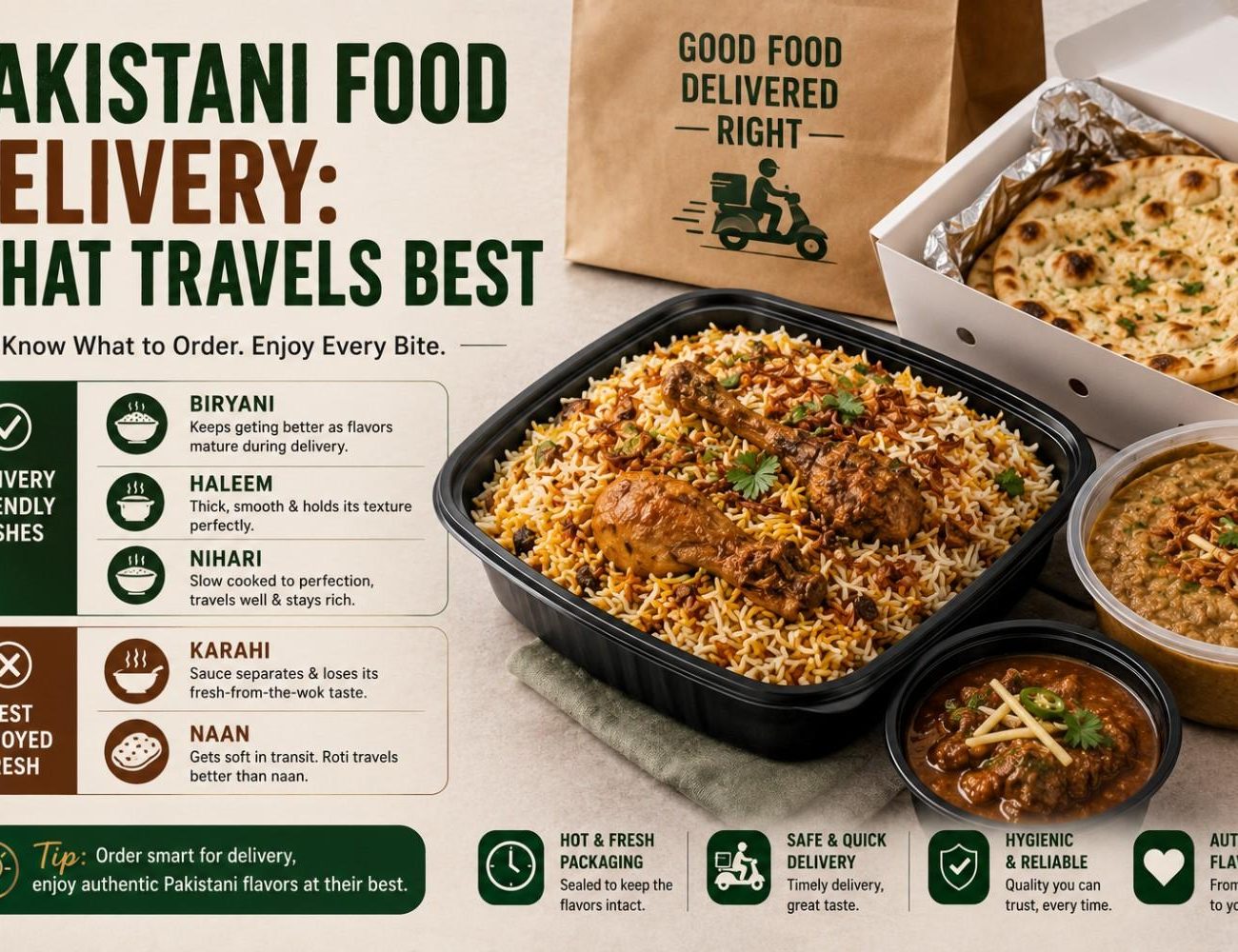
Why slow-cooked dishes like Nihari and Haleem reward unhurried eating comes down to what those dishes produce structurally, depth that reveals itself across the meal rather than front-loading everything into the first bite. A karahi eaten in ten minutes and a karahi eaten across forty, with conversation between servings and bread ordered twice, are not the same eating experience. The dish is identical. The time available to it is not.
How shared dish format changes the experience of a group meal establishes the mechanics. A large biryani pot at the center of a Friday table keeps the table eating together rather than in parallel. People return to it. They take more of what they liked. The second serving tastes different from the first because the masala has settled further into the lower layers of the rice. The meal develops rather than simply continuing.
Pakistani food’s weekend dominance in the UAE is not a popularity story. A more popular cuisine would show the same pattern everywhere and every day. The weekend concentration is a format story, the food and the behavioral moment it lands in are structurally compatible in a way that produces something specific and non-accidental.
Who Chooses Pakistani Food on UAE Weekends?
The UAE weekend table is not one table.
Construction workers and laborers on their day off gather in groups at restaurants near accommodation areas in Sharjah and Ajman, ordering large shared portions of biryani and karahi across tables that have been pushed together. For most of them the weekend is the only meal in the week that isn’t eaten alone or in a rush, and the food reflects that, substantial, shared, unhurried.
South Asian families spread across Dubai’s residential neighborhoods consolidate on Fridays. Multiple households arrive at one, or everyone meets at a restaurant that has enough table space to hold the gathering. The meal is the event. There is no other plan around which the food fits. The food is the plan.
Office professionals whose social life gets compressed into two days organize around a different rhythm, brunches that extend into late afternoon, dinner reservations that start later than the week would allow. Pakistani food appears in that pattern too, less as the centerpiece of a household gathering and more as the late-night order after a long Friday, or the Saturday lunch that replaces what didn’t happen during the week.
Different routes to the same table. The convergence isn’t cultural proximity, though that plays a role for some. It’s format compatibility. A cuisine built around shared, large-format, unhurried eating lands in the behavioral gap that UAE weekends open up, regardless of which social route the person took to get there. Why Pakistani food became one of the most visible cuisines in the UAE extends this further into the broader visibility story.
Pakistani Dishes That Define Weekend Meals in the UAE
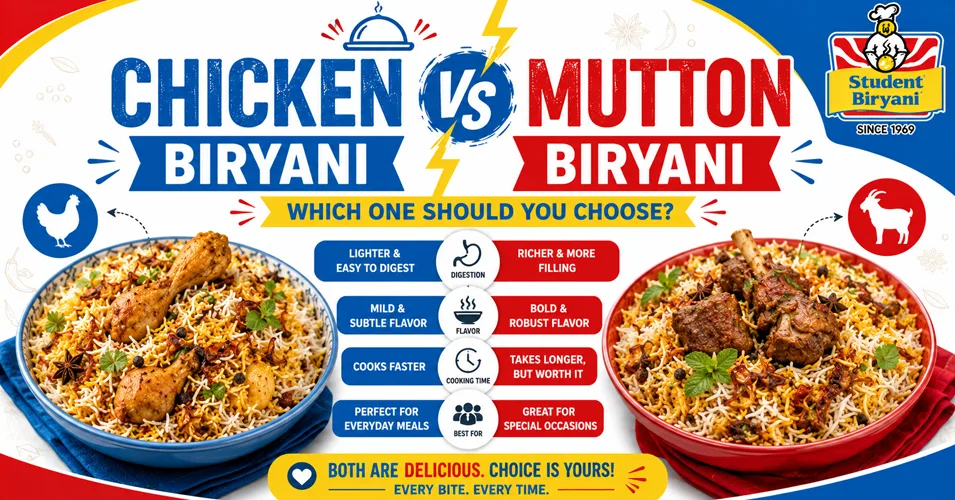
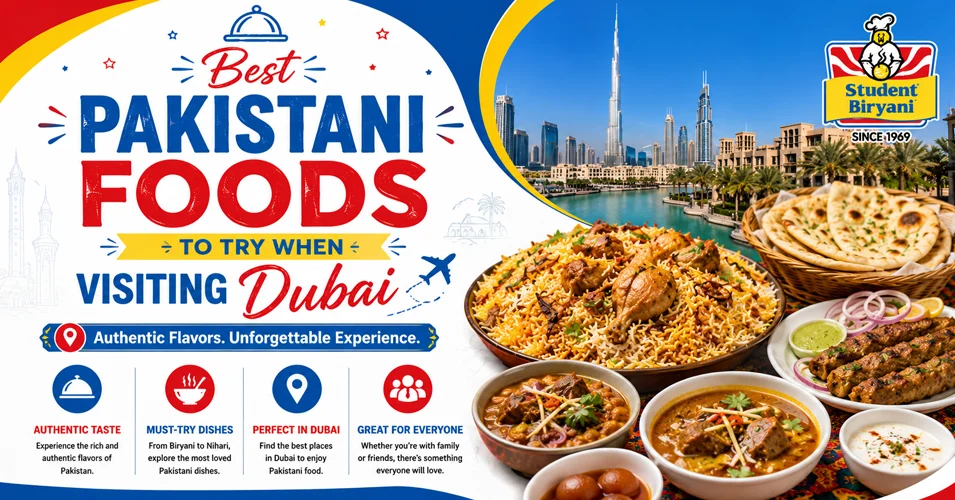
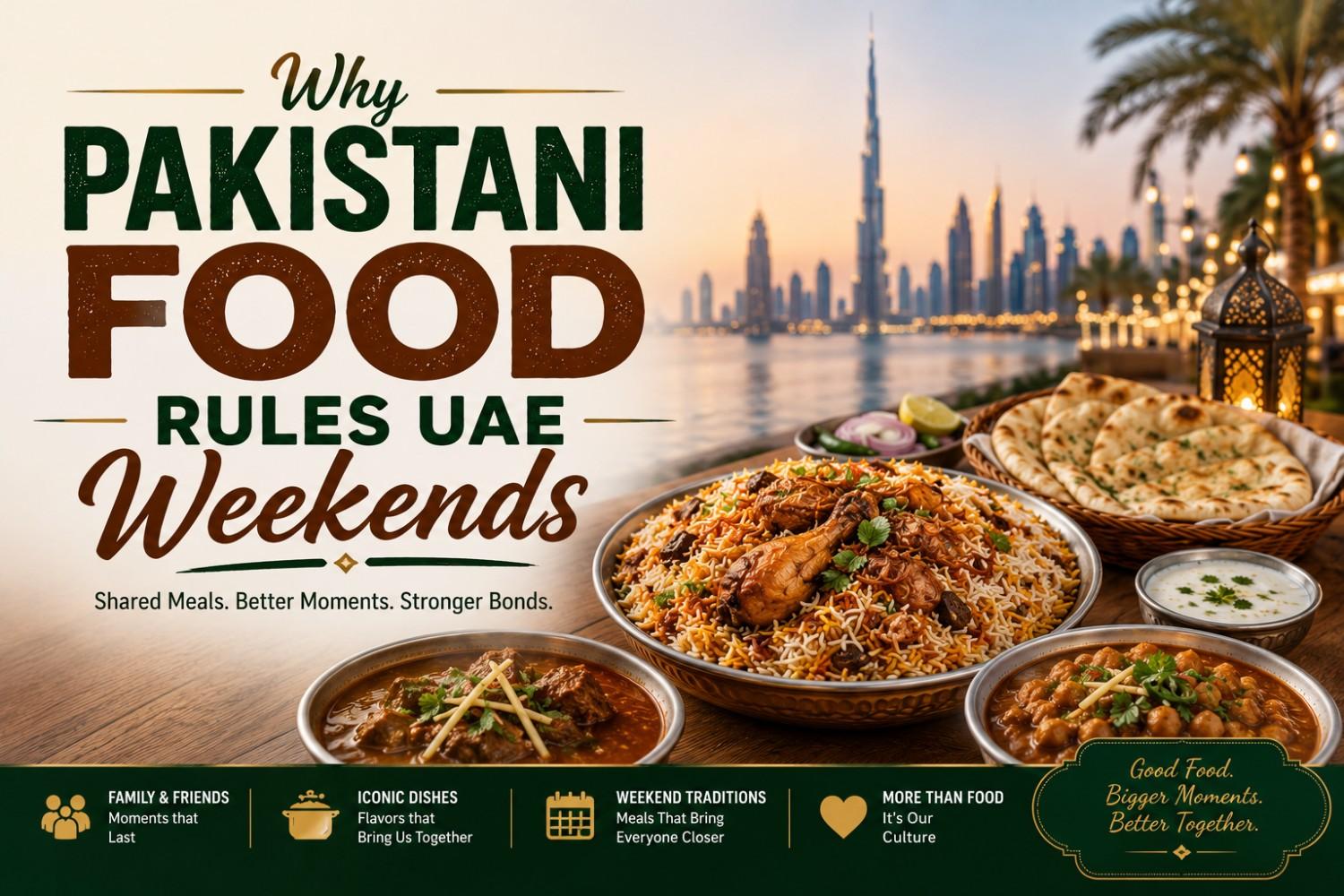
Biryani anchors the Friday meal across almost every variation of the weekend table described above. The large-format pot, the shared serving, the way the dish keeps developing across multiple servings, all of it suits a table that has time and people. A biryani ordered for one person on a Tuesday is a meal. A biryani ordered for eight on a Friday is a different social object entirely.
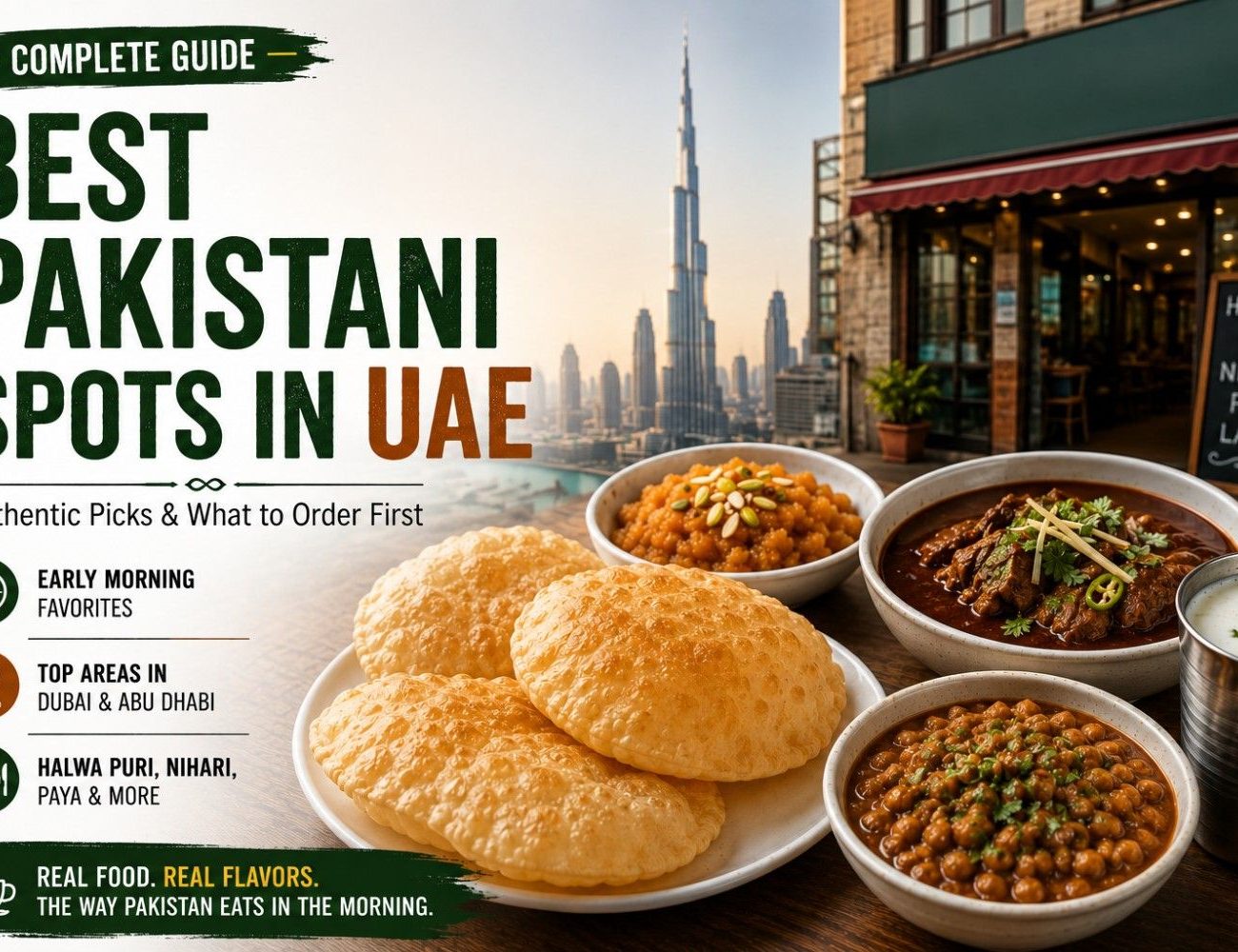
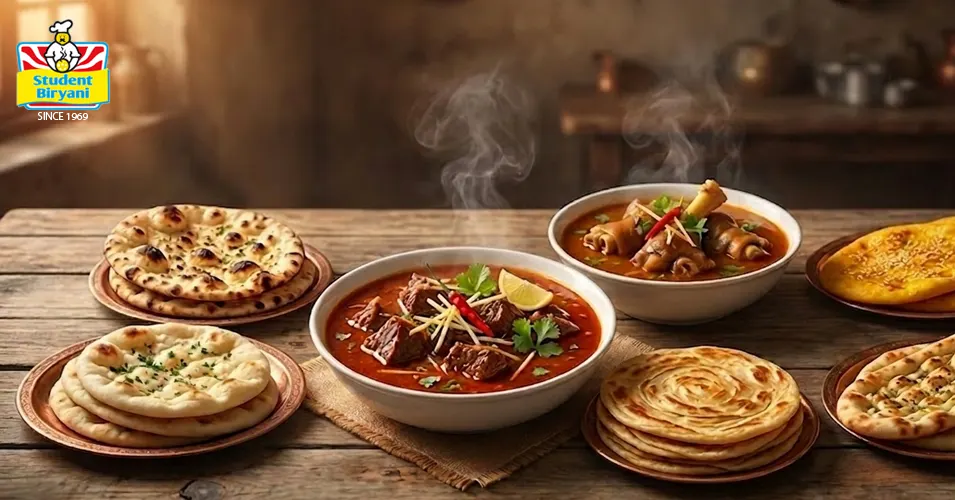
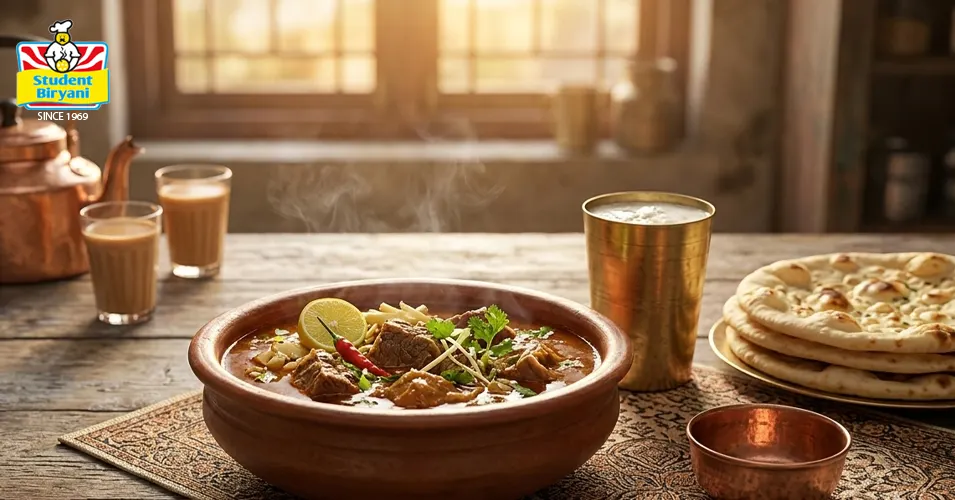
Nihari belongs to Friday mornings specifically. Why Nihari specifically suits a morning with nowhere to be comes down to the pace the dish demands, the bread ordered more than once, the garnishes adjusted between bowls, the meal that moves at the speed of a conversation rather than a schedule. Weekdays don’t produce that morning. Fridays do.
Karahi keeps the afternoon table alive. What makes karahi the dish people keep returning to at a shared table is the open vessel, the direct heat, the sauce that stays consistent from the first serving to the last without degrading into something softer and less itself. A karahi ordered mid-meal, after the biryani has cleared, extends the occasion rather than replacing it.
Haleem suits the slower part of a long Friday, the late afternoon lull after the main meal, or the early evening when appetite has returned partially but not fully. Its density makes it the right food for a moment that needs something substantial without being another full meal.
Student Biryani’s branches across Dubai, Abu Dhabi, Sharjah, and Ajman are built around this format by default. The menu covers all four weekend anchors, order chicken biryani, order beef Nihari, order authentic beef Haleem, and the shared table format is already built into how the food arrives. Find your nearest Student Biryani branch for the Friday meal or the Saturday afternoon that needs a table rather than a counter.
Pakistani food looks like habit from the outside. From the inside of a UAE Friday, it’s the food that fits what the day actually is.