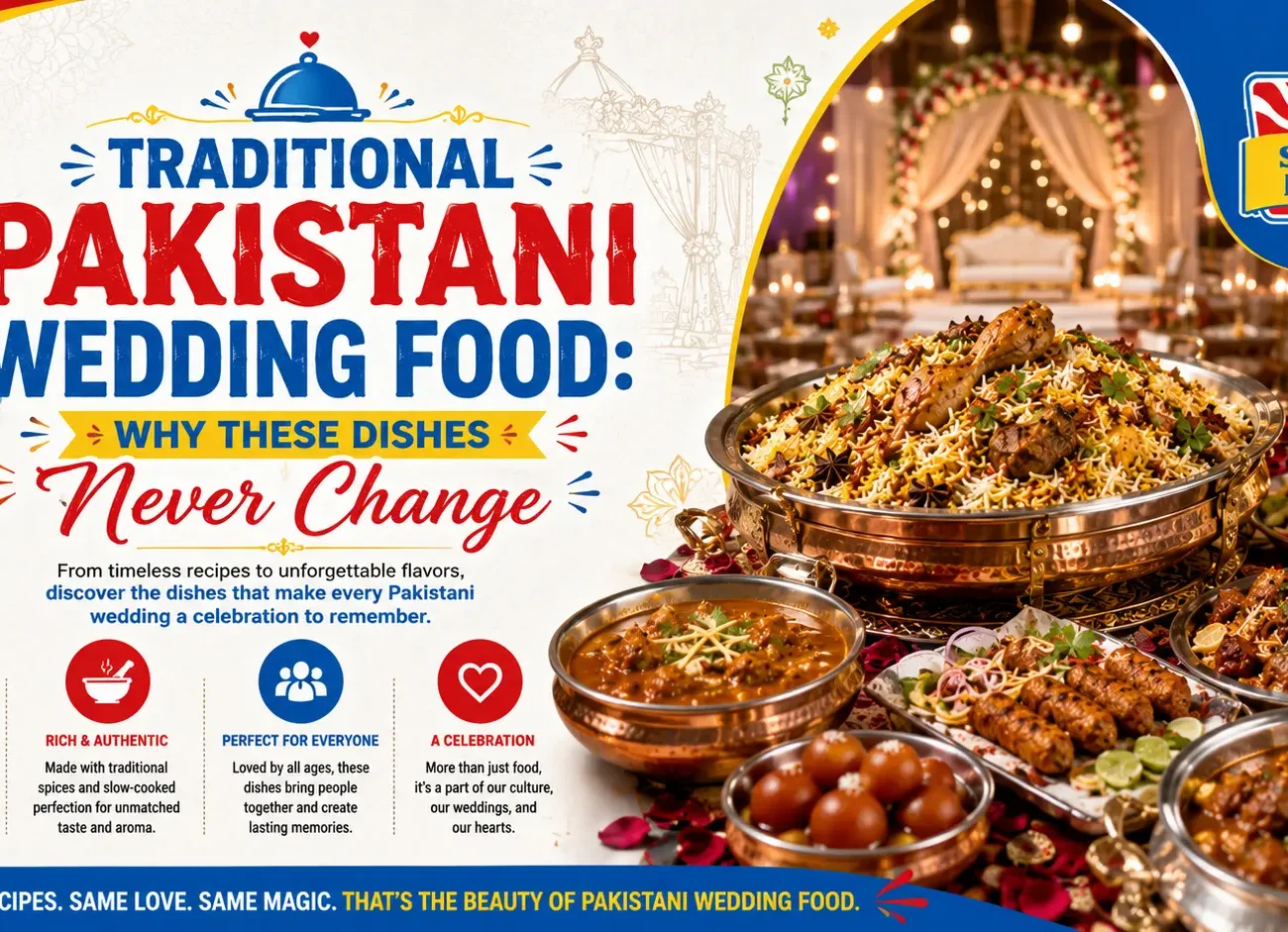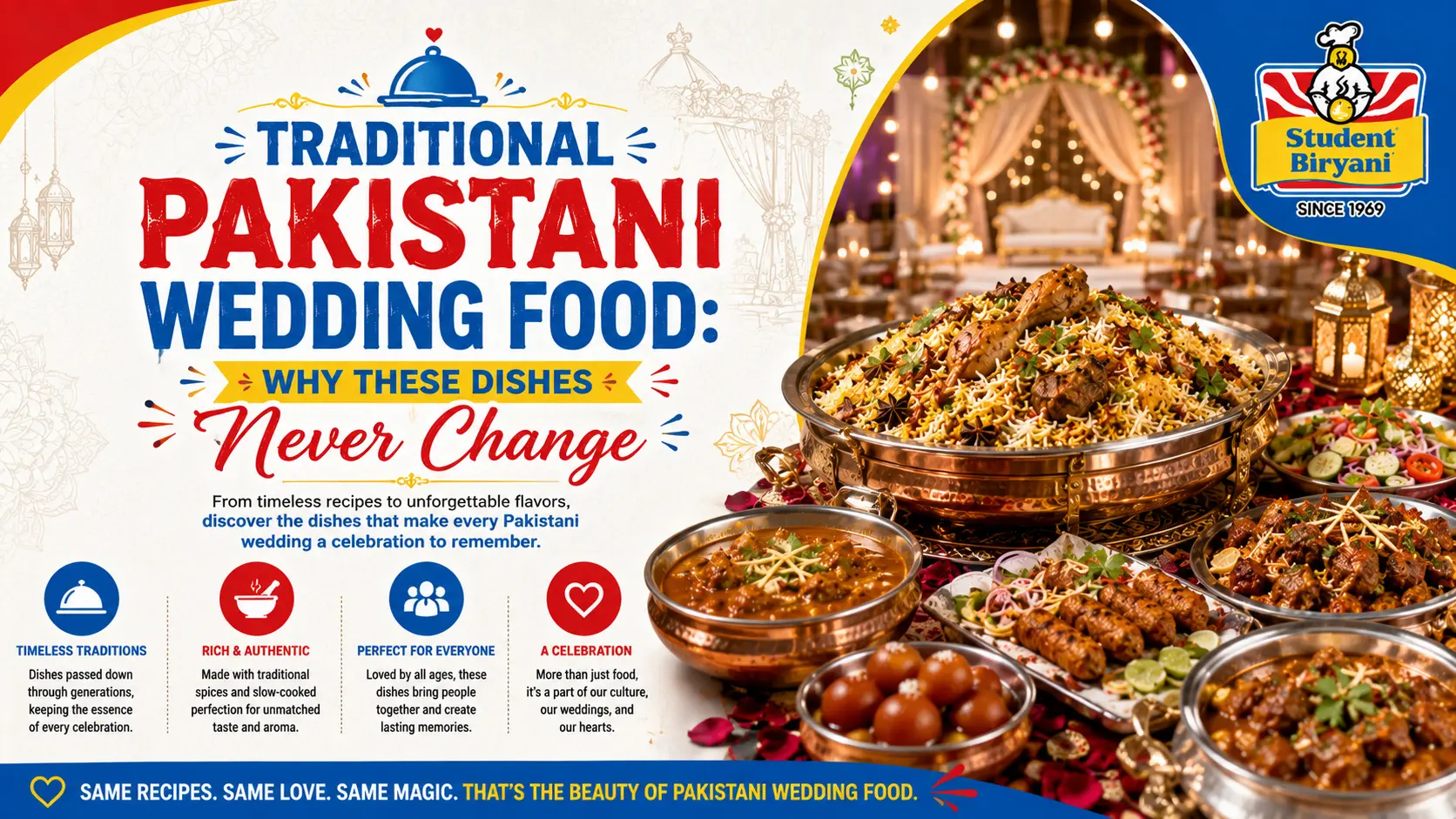
Attend enough Pakistani weddings and a pattern becomes impossible to ignore. The venues change. The families change. The cities change, and in the UAE, sometimes the country changes. The food doesn’t change much.
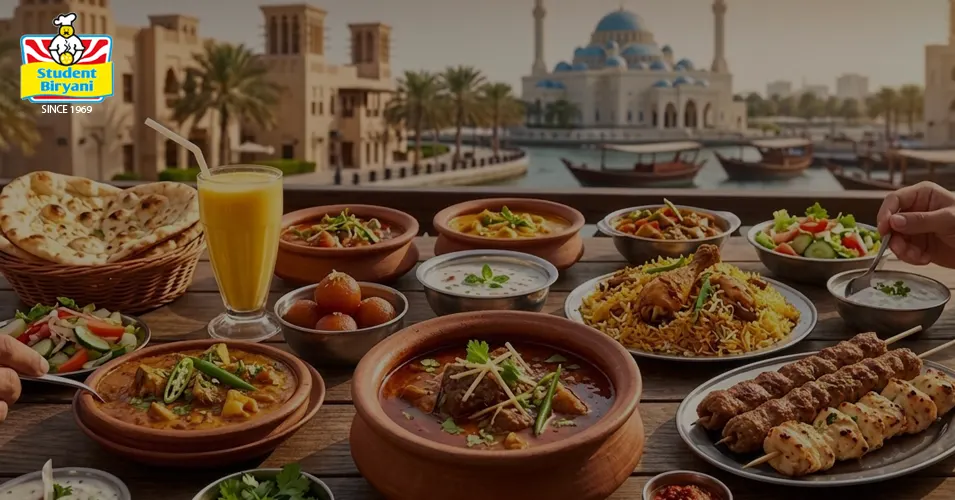
Biryani appears. Karahi appears. Something with mutton appears. Seekh kabab circulates before the main spread opens. Zarda or kheer arrives after it closes. The menu reads like it was agreed upon somewhere, by someone, a long time ago, and then transmitted forward without much revision.
The interesting question is not what gets served. The interesting question is why the same things keep getting served, across families who don’t know each other, across budgets that vary enormously, across weddings where the only shared variable is the occasion itself.
The answer is not blind tradition. Tradition is what the selection looks like from the outside. From the inside, the dishes that appear consistently at Pakistani weddings are the ones that actually work for what a wedding requires from food: feeding hundreds of people arriving in waves across several hours, signaling the host’s standing without individual attention to each plate, and closing an occasion that has its own emotional architecture requiring a specific kind of close.
How shared dish format scales from a family birthday table to a wedding hall is one part of that logic. But a wedding isn’t a scaled-up birthday dinner. It’s a different occasion entirely, with different demands, and the food that survives across it has earned that position through something more durable than habit.
Traditional Pakistani Wedding Dishes That Work for Large Events
A wedding kitchen is not a restaurant kitchen running at high volume. It is a different operation solving a different problem, one where the food needs to be ready in quantity before the first guest arrives, hold quality across a window that might run three hours, and serve people who arrive continuously rather than simultaneously.
Most dishes cannot meet those conditions without degrading. A karahi made for ten and a karahi made for three hundred are not automatically the same dish. Most preparations that work beautifully at a family table produce something flatter and less precise at scale. The dishes that appear at Pakistani weddings are largely the ones that proved otherwise over generations of being tested in exactly this environment.
Why Biryani Holds Up at Scale
Biryani scales in a way that very few rice dishes do. Why biryani’s dum cooking method holds quality across large-scale preparation comes down to the sealed heat process, large deg pots maintaining the same steam environment that a smaller pot produces, the rice continuing to absorb and develop rather than sitting and hardening. A biryani made for five hundred people in a proper deg, by people who know the method, can taste closer to the original intention than a smaller quantity made carelessly. The method protects the dish at scale rather than exposing it.
Why Karahi Works as Continuous Preparation
Karahi works differently. Rather than being prepared entirely in advance and held, karahi at a wedding operates as a continuous preparation. Why karahi’s open vessel format suits continuous serving at a large gathering is that the open pan allows replenishment and adjustment throughout the serving period rather than requiring the full quantity to be ready simultaneously. Guests who arrive in the first wave and guests who arrive an hour later are eating from a fresher preparation than a pre-plated dish would allow.
Why Daal Anchors the Menu
Daal anchors the gentler end of the spread. It holds indefinitely without quality loss, provides a lighter option alongside the heavier preparations, and serves the guests who arrive late and hungry after the main wave has cleared the more elaborate dishes. Its presence on a wedding menu is rarely glamorous and almost always necessary.
Why Certain Pakistani Wedding Dishes Represent Hospitality and Status
A Pakistani wedding menu has more food than the guests can eat. This is not inefficiency or excess without purpose. It’s a communication system, and understanding it changes how the menu reads.
Some dishes are there to feed the room. Others are there to tell the room something about the family that assembled it.
Mutton and the Signal of Status
Mutton carries different weight than chicken at a formal occasion. Why mutton carries different cultural weight than chicken at a formal Pakistani occasion runs deeper than price. Whole roast preparations, a full leg of lamb, a large roast chicken presented rather than portioned in the kitchen, these signal a host who went beyond the functional minimum. The guest receiving that plate is receiving information about how they are regarded, not just food.
Grilled Items as Threshold Food
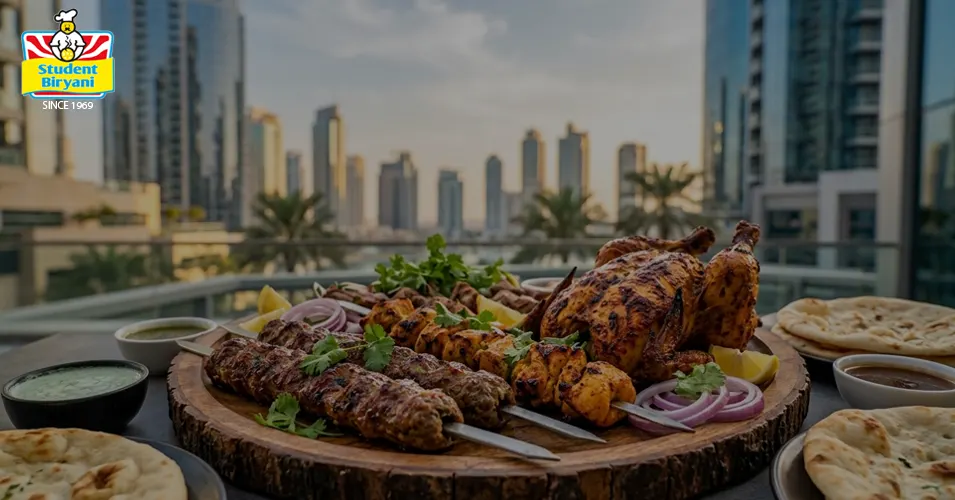
Seekh kabab and grilled items circulate before the main spread opens for a reason that has nothing to do with hunger. Guests arrive across the first hour of a wedding while the occasion is still assembling itself. The main food isn’t ready or isn’t appropriate yet. Grilled items in motion, passed on platters, available at a station, keep the room fed and socially active without committing the occasion to the formality of the main meal. They are threshold food, serving the transition between arrival and event rather than the event itself.
Abundance as a Deliberate Signal
The apparent redundancy of a Pakistani wedding menu, the three rice dishes, the two karahi preparations, the multiple meat options, is not redundancy at all. Each layer is doing a different thing. The scale dishes feed the room. The prestige dishes tell the room something. The variety itself, regardless of what gets eaten, signals that the host prepared for more than the minimum. Abundance as signal is as old as hospitality itself, and Pakistani wedding food carries it without apology.
Traditional Pakistani Wedding Desserts and Their Cultural Meaning
Zarda arrives after the main food has cleared, and its arrival means something specific to everyone in the room who has been to a Pakistani wedding before.
Zarda as a Closing Signal
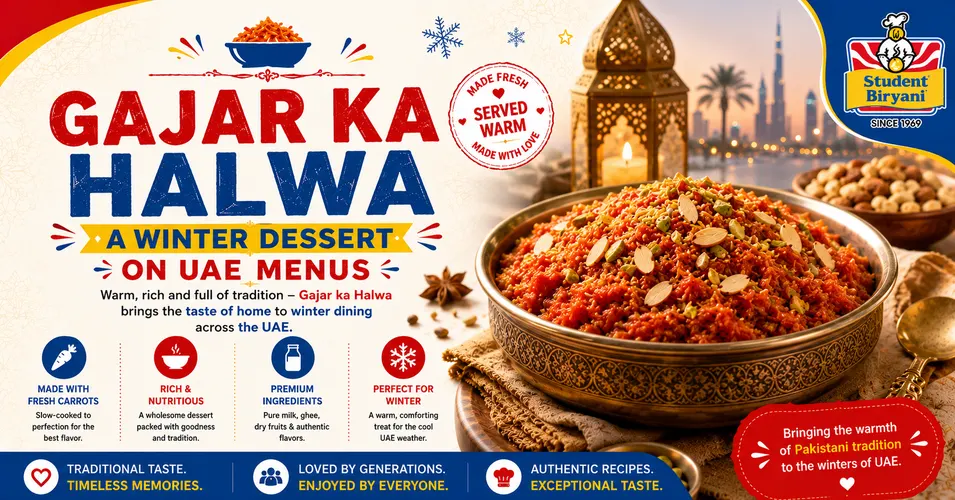
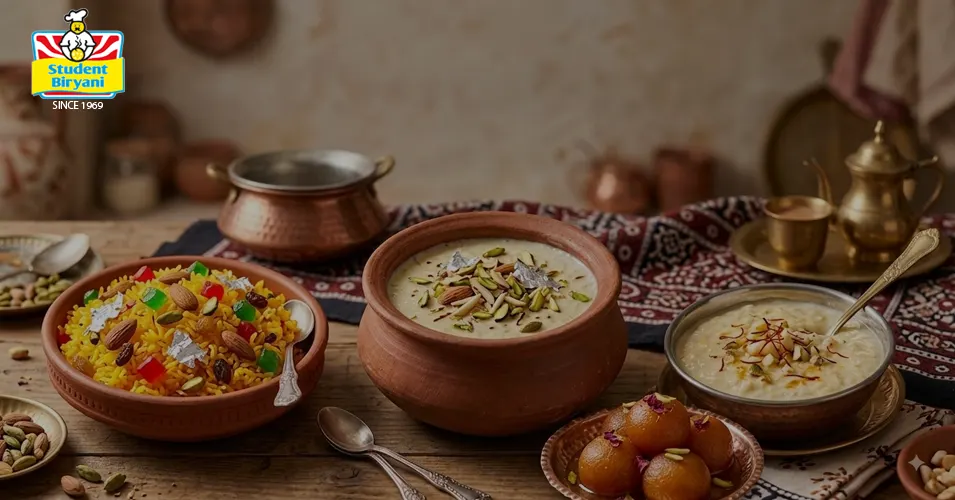
Sweetened rice colored with saffron, studded with nuts and dried fruit, zarda is recognizable as a wedding dish in a way that kheer or mithai alone isn’t. It appears at weddings and almost nowhere else in the regular food calendar, which gives it a timing function beyond its taste. When zarda arrives at the table, the wedding is closing. Not ended. Closing. The main occasion has passed its peak and the meal is entering its final register.
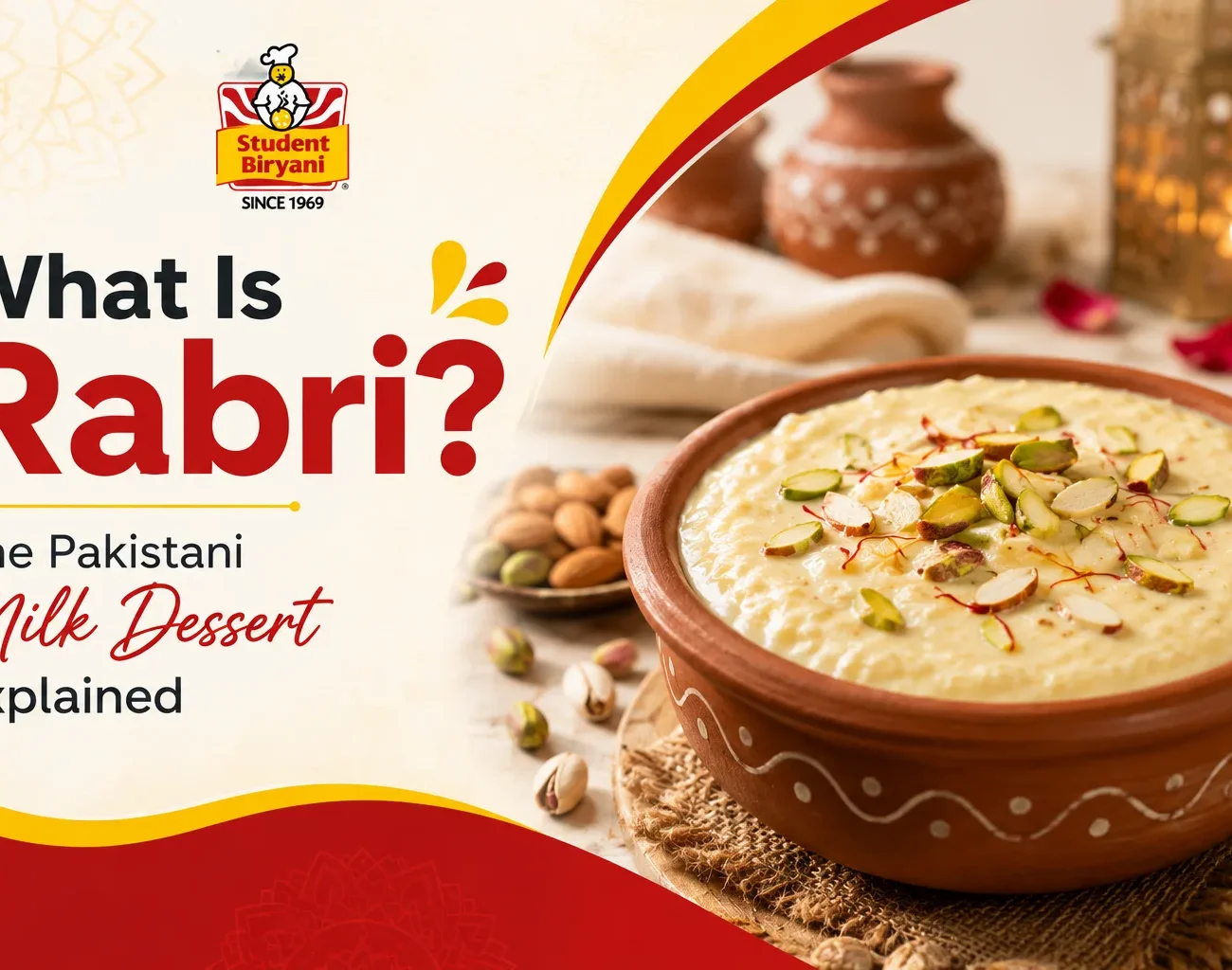
That register is deliberately gentler than what preceded it. A wedding that spent three hours building through grilled arrivals, the main biryani service, karahi replenishments, and the signal dishes of the prestige course does not close on something equally intense. Zarda’s sweetness is quieter than the meal it follows. Kheer, where it appears, is quieter still. Neither is trying to compete with what came before. Both are trying to change the key of the occasion, gradually, so the transition from wedding to departure doesn’t feel abrupt.
Mithai as a Gesture Guests Carry Home
Mithai operates in a different register entirely. The boxes of sweets distributed as guests leave are not a dessert course that didn’t make it to the table. How Pakistani meals are structured to close gently rather than peak at dessert is part of the logic here, but at a wedding the mithai box is specifically a closing gesture, something the guest carries out of the occasion rather than consuming inside it. The sweetness travels with them. The wedding follows them home in a small way. That’s not accidental.
How to Plan a Traditional Pakistani Wedding Menu
A Pakistani wedding menu that works is built across three layers, and each layer has a job the others can’t cover.
Layer One: The Scale Dishes
The scale dishes, biryani, karahi, daal, carry the room. They feed the waves of guests across the full serving window without degrading, hold quality at quantities that would break most preparations, and provide the structural substance the occasion requires. Remove them and the wedding has signal without foundation.
Layer Two: The Signal Dishes
The signal dishes, the mutton preparations, the roast presentations, the grilled arrivals, tell the guests something about the host. They communicate standing, generosity, and the degree of care that went into the occasion. Remove them and the wedding feeds people without speaking to them.
Layer Three: The Closing Sweets
The closing sweets, zarda, kheer, mithai, change the register of the occasion as it ends. They signal that the meal is closing before the departure begins, give the evening a deliberate close rather than an abrupt stop, and send something of the occasion with the guests when they leave. Remove them and the wedding ends rather than closes.
A menu missing any one of those layers produces an occasion that guests sense as incomplete without being able to name why. The food was fine. Something was off. What was off was a layer of function that the selection didn’t cover.
Student Biryani handles wedding catering across Dubai, Abu Dhabi, Sharjah, and Ajman with the menu architecture already built in: the scale dishes prepared through the methods that hold quality at wedding quantities, the grilled preparations, the full spread that covers all three layers without requiring the host to assemble it from separate sources. Explore Student Biryani’s wedding catering options before the planning conversation reaches the menu stage rather than after.
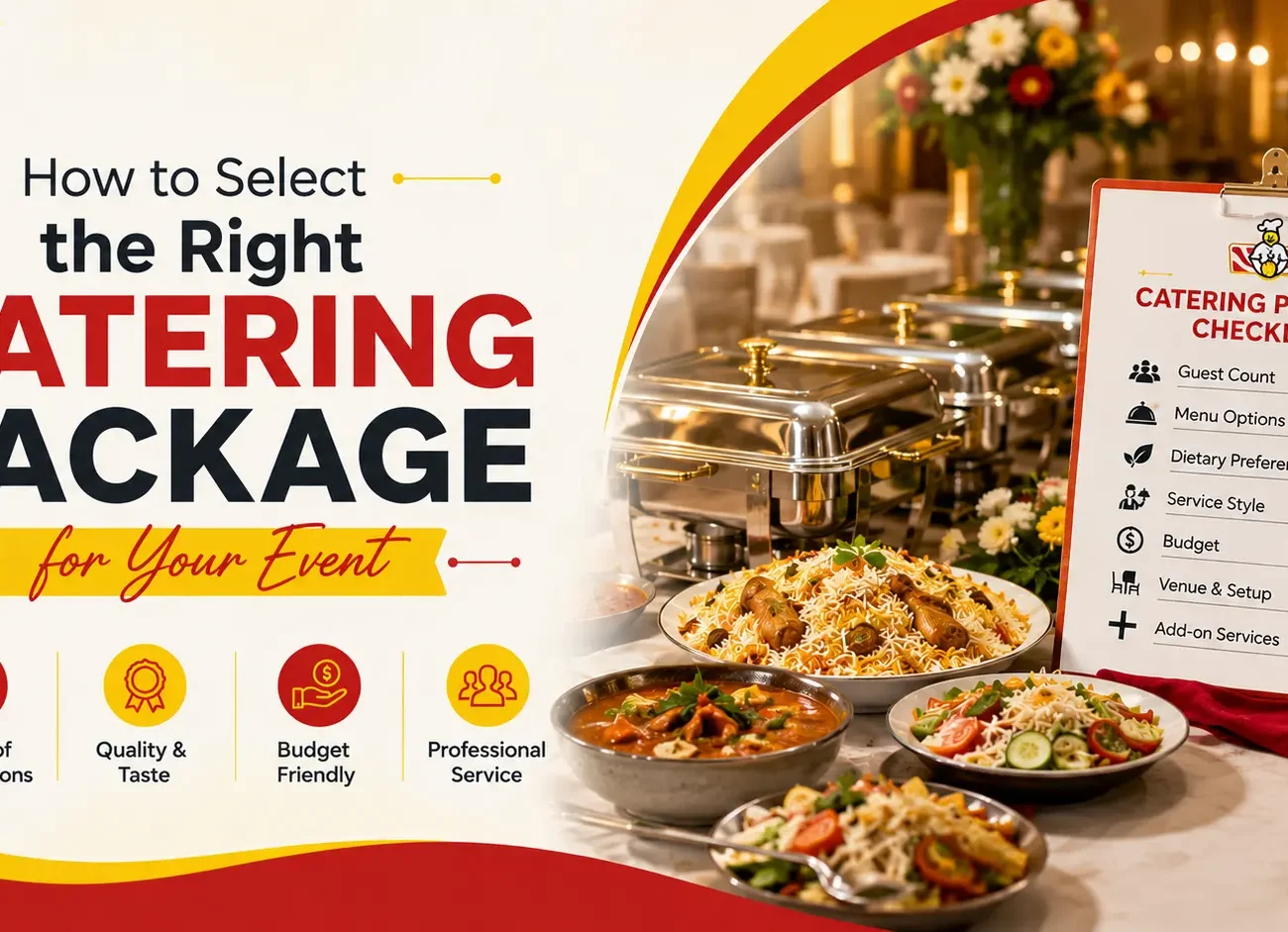
For anyone moving from the menu decision toward the catering selection decision, how to match a catering package to what a Pakistani wedding actually requires is the next question worth working through.
What capability looks like in a catering service handling wedding-scale events covers the execution side: how to evaluate whether a service can actually deliver what a wedding menu requires, not just whether it lists the right dishes.
Tradition and function are not competing explanations for why Pakistani wedding food looks the way it does. They are the same explanation, seen from different distances.