What Happens to Pakistani Food During Delivery?
The order gets placed, the confirmation arrives, and somewhere between the kitchen and the door a twenty-minute window opens that most people treat as passive. The food is made. Now it travels. What happens during that travel tends to get attributed to temperature alone, as if cold were the only variable worth thinking about.
It isn’t.
A sealed delivery container is its own environment. Steam builds inside it from the moment the lid closes. That steam interacts differently with a sauce-heavy dish than with a dry-grilled one. Fat in a hot masala behaves differently at eighty degrees than it does at cooking temperature. A dish with structural density holds heat from its core outward. A dish built around a reduced, concentrated sauce keeps reducing, slowly, with nowhere for the moisture to go except back into what it just left.
Some dishes arrive better than they left the kitchen. Some arrive as a diminished version of what they were five minutes after plating. The difference is not about the distance or the packaging. It’s about what each dish is structurally made of and how those properties respond to containment, steam, and time away from the flame.
Ordering for delivery and ordering at a restaurant are not the same decision dressed in different packaging.
Pakistani Cuisines That Stay Fresh During Delivery
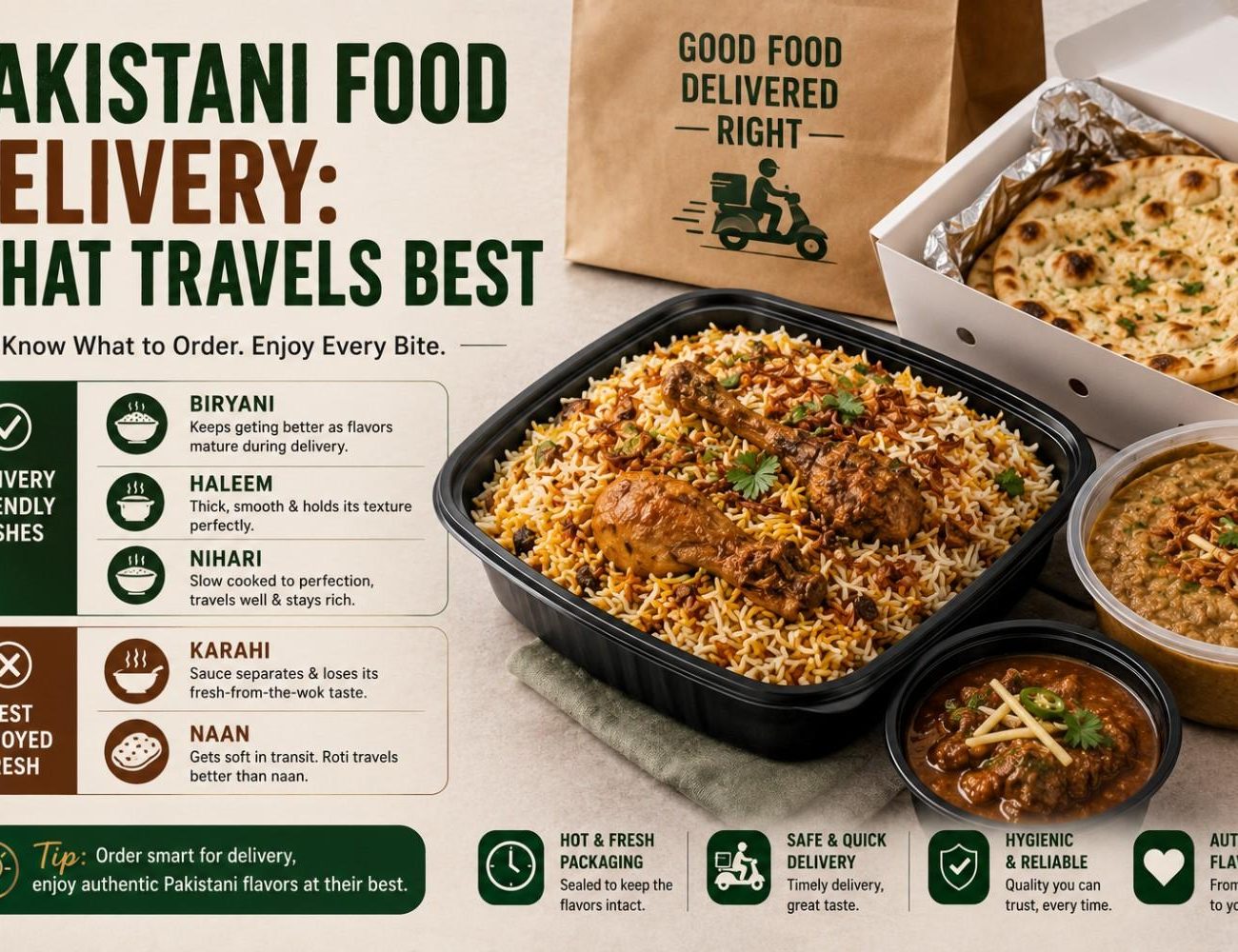
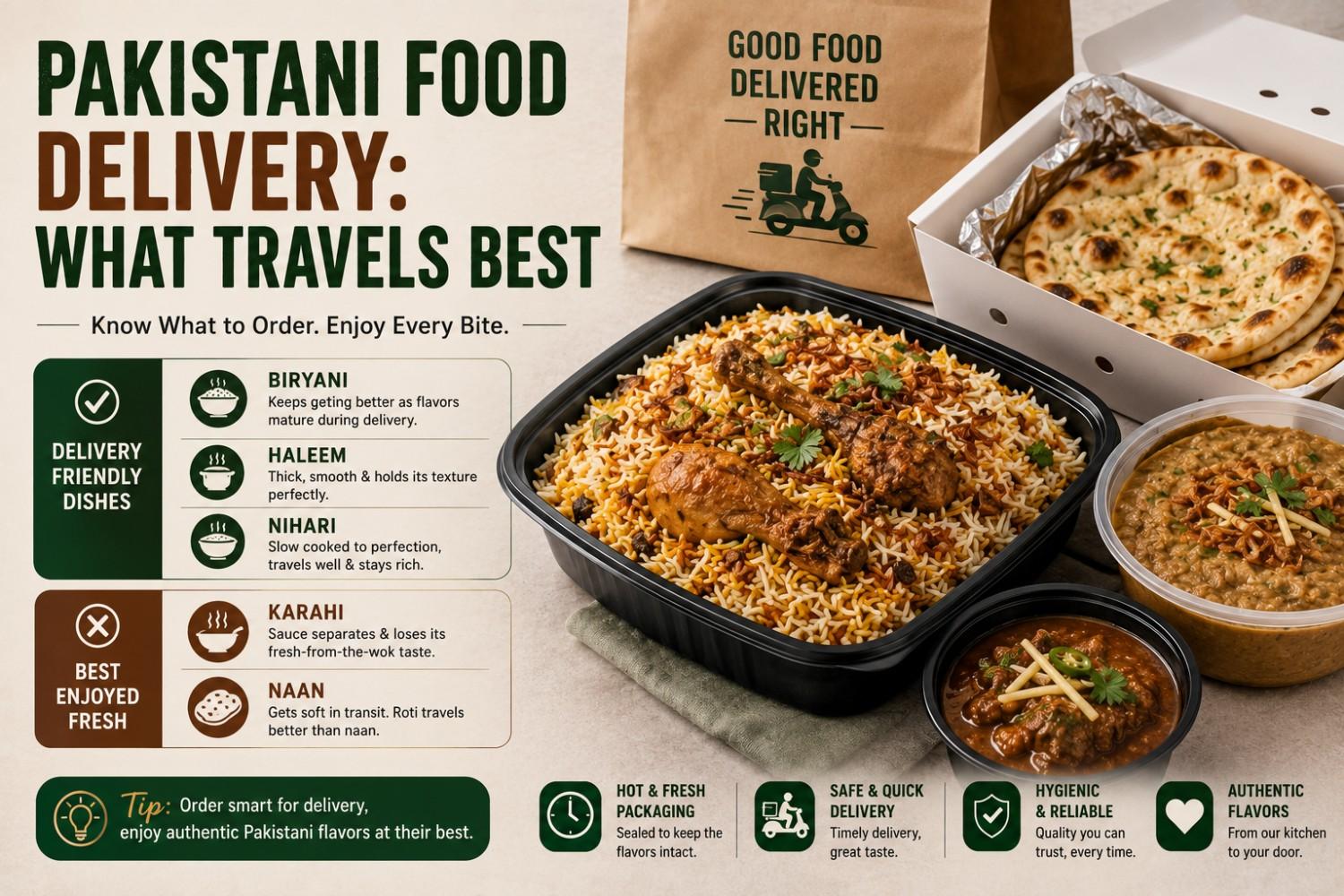
Biryani is one of the few dishes that continues doing what it was designed to do inside a sealed container.
Dum cooking is fundamentally a sealed-heat process. Rice absorbs masala gradually under contained steam, which is why why biryani’s rice keeps absorbing masala after the pot is sealed is not a restaurant phenomenon only. A biryani sealed in a delivery container is operating inside a smaller version of the same environment. The steam keeps the rice absorbing. The fat in the masala insulates the grains against rapid temperature drop from the outside in. A biryani that has rested in a sealed container for fifteen minutes during transit often arrives more integrated than one served immediately after the pot was opened, because the absorption process had more time to run.
Haleem makes the same argument from a different structural position. What makes Haleem’s texture structurally stable once the cooking is complete is that the breakdown of wheat, lentil, and meat into a unified texture is already finished before the dish leaves the kitchen. There is no further degradation available because the dish has already passed through every structural change the cooking was going to produce. A sealed container simply holds what the hours of cooking already completed. Haleem delivered across twenty minutes and Haleem eaten at the restaurant five minutes after it was ready are not meaningfully different dishes. The argument could be made that the short rest in transit suits it.
Both dishes were built around time and containment. Delivery adds more of both, and neither is worse for it.
Pakistani Dishes Best Enjoyed Fresh at the Restaurant
Karahi is at its best in the sixty seconds after it leaves the pan, and that is not an exaggeration.
Why karahi’s sauce is built around reduction and direct heat contact is the starting point here. The open vessel, the high heat, the aggressive reduction, all of that produces a sauce that is concentrated, oil-separated, and calibrated to a specific fat-to-sauce ratio at the moment it’s plated. That ratio doesn’t hold in a sealed container. The steam that builds inside the box has nowhere to go, so it settles back into the sauce. The oil that separated cleanly to the surface during reduction re-emulsifies as the temperature drops. The concentrated, direct quality that makes karahi what it is softens into something closer to a generic curry during transit. The dish arrives. It tastes like karahi. It doesn’t taste like karahi fresh from the pan, and the distance between those two things is wide enough to matter.
Naan compounds the problem from the bread side. A tandoor crust forms in seconds under very high heat and gives naan the structural integrity that makes it worth eating against a heavy sauce. Steam in a delivery container softens that crust within the first few minutes of transit. By the time the order arrives, the naan has the texture of something that got caught in light rain. Roti travels slightly better because it has no crust to lose, its texture changes less dramatically in a humid container than naan’s does, which makes it the more honest bread choice for a delivery order.
Neither of these is a reason to avoid karahi or naan entirely when ordering for delivery. It’s a reason to know what you’re getting before it arrives.
Best Pakistani Food to Order for Delivery
The structural logic points toward a clear ordering hierarchy that has nothing to do with preference and everything to do with what survives the journey.
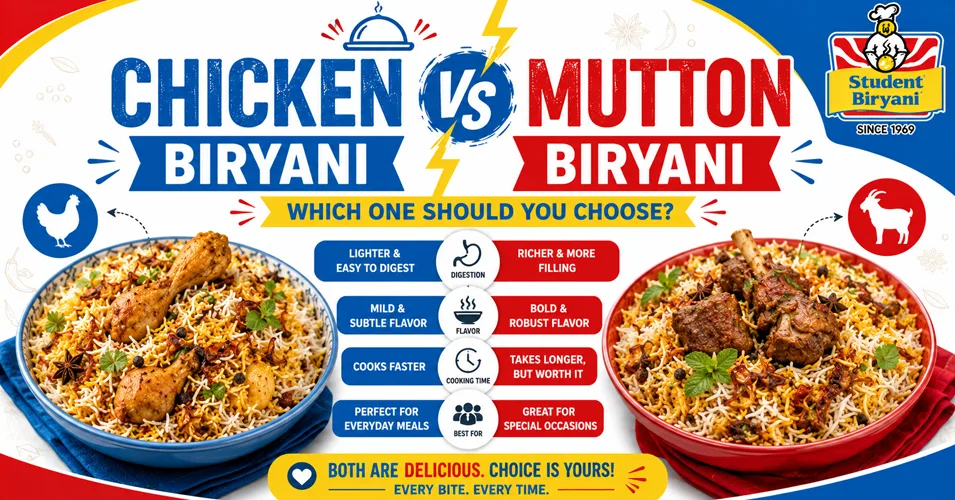
Biryani is the delivery order. Chicken or mutton, both travel well for the reasons Section 2 established, and both arrive representing what they actually are rather than a transit-affected approximation. Haleem sits alongside biryani as the other primary option, structurally complete before it leaves the kitchen, holds across the delivery window without meaningful change, and is arguably one of the most delivery-suited dishes in the entire Pakistani menu.
Nihari follows closely. Why Nihari’s sauce structure makes it one of the more stable delivery options comes down to the gelatin content and fat insulation that overnight cooking produces. A sauce with that much structural body doesn’t collapse under a twenty-minute transit the way a reduction-based sauce does. The fat holds the temperature. The gelatin holds the sauce. Nihari delivered is still Nihari.
Karahi is the restaurant order where the option exists. If it’s being delivered anyway, order it with that understanding and don’t measure it against the version that arrives at a table two minutes after the pan. Grilled items, seekh kabab, tikka, malai boti, are more structurally resilient than people expect. Grilled meat cools evenly, the char holds, and there’s no sauce degrading in transit. A platter of mixed grilled items travels with more integrity than a karahi does.
Swap naan for roti on any delivery order that would normally come with bread.
Student Biryani delivers across Dubai, Abu Dhabi, Sharjah, and Ajman. The dishes that travel best, biryani, Haleem, Nihari, are the ones the kitchen is built around. Order chicken biryani, order mutton biryani, or order authentic beef Haleem with the confidence that what arrives at the door is what the dish actually is, not a delivery-window version of it.
Restaurant logic and delivery logic are two different frameworks applied to the same menu. The menu doesn’t change. What you understand about it should.