BBQ at a Corporate Event Is a Different Problem
BBQ gets chosen for corporate events because it feels like the safe option. It’s familiar, it signals a relaxed atmosphere, and most people will eat it without complaint. The reasoning is sound on the surface.
The problem appears once the event is underway.
A corporate gathering is not a casual social occasion with a company logo on the invitation. People are managing professional impressions, moving between conversations, and eating while doing other things simultaneously. The relaxed format that makes BBQ appealing at a family gathering works against it in that context. Food that requires sitting down, uses both hands, or produces mess that would go unnoticed at a garden party becomes a friction point when the person eating it is also trying to maintain a professional conversation with a client or a senior colleague.
Choosing BBQ for a corporate event is not the wrong decision. Choosing it without thinking about how a corporate event actually works usually is. How workplace context shapes food format decisions differently from social gatherings is the foundation for understanding why the same food can succeed in one setting and quietly fail in another.
How Corporate Events Actually Eat
Most people at a corporate event are not eating. They are talking, and eating happens in the gaps.
That distinction changes everything about which food works. A plate gets picked up, something gets taken from it, the plate gets held in one hand while the other hand is occupied with a drink or a handshake. The food needs to be easy to handle. Guests should not have to pause everything else just to finish a meal.
Food that needs two hands to eat, produces dripping sauces, or requires a knife and fork takes the person out of the social flow of the event. They have to find a surface, put their drink down, deal with the food, and re-enter the conversation. At a birthday dinner that interruption lasts seconds and nobody notices. At a corporate event with a client standing across from them, it registers.
Why the sitting shared table format that works for birthday dinners doesn’t translate directly to standing corporate events comes down to how people eat in each setting. The environment changes, and the food has to change with it.
Mess compounds the problem. A sauce that marks a shirt or a skewer that requires more force than expected to eat draws attention to the act of eating in a way that professional settings amplify. The food should disappear into the event rather than become a moment within it.
Portion size matters for different reasons here than at a seated dinner. At a corporate event, people graze. They take small amounts across a longer period rather than sitting and eating a full plate at once. Food that serves well in large single portions at a dinner table needs to work differently when the eating pattern is spread across an hour or two of movement and conversation.
Why Pakistani BBQ Suits the Corporate Format
Pakistani BBQ is built around a portion structure that happens to solve most of the problems a corporate event creates.
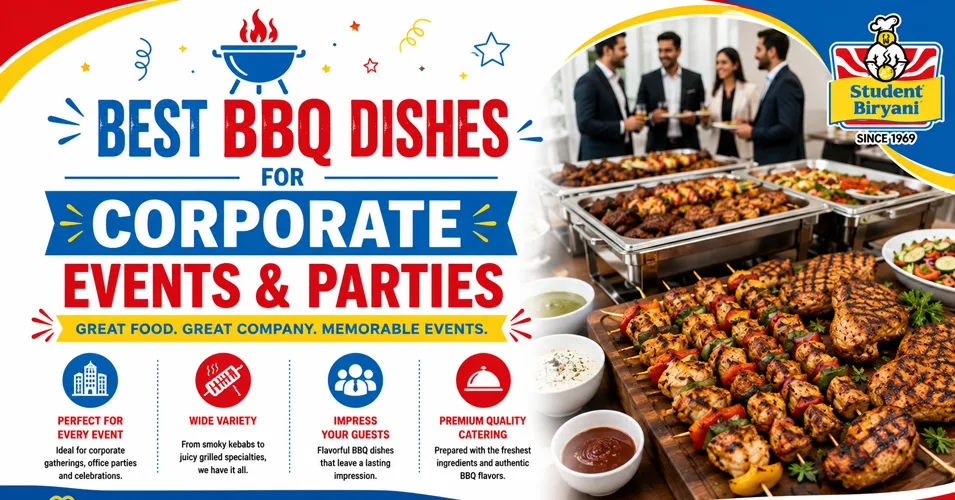
Seekh kabab, tikka, malai boti, and similar preparations are skewered and grilled in self-contained portions. They don’t require cutlery. They don’t produce significant drip or mess when eaten standing. A single piece can be taken from a platter, eaten in two or three bites, and finished without requiring the person eating it to find a surface or put anything down. That format fits the physical reality of a corporate event in a way that heavier, sauce-based dishes don’t.
The variety within a standard Pakistani BBQ spread works in the corporate context too. Different cuts and preparations across the same platter mean people can take what suits their appetite without the spread requiring a separate order for different preferences. Seekh kabab for someone who wants something lighter, malai boti for someone who wants something richer, tikka for someone somewhere between the two. The platter handles the variation without the organizer having to anticipate it.
Bones are rarely a concern with Pakistani BBQ. Seekh kabab, boti, and many tikka preparations are designed to be easy to eat, which suits corporate events where guests are often standing or networking. The advantage feels small until someone has to juggle a plate, a drink, and a bone-in item at the same time.
For events that include a seated dining section alongside the standing reception, why karahi works as a seated accompaniment when corporate events include a dining section covers how a rice and karahi combination can anchor the seated portion without requiring a separate catering format.
Planning the Spread for a Corporate Headcount
Corporate event headcounts are more reliable than birthday groups, but the eating pattern is less predictable. People graze across a window rather than sitting and eating at the same time, which means the food needs to last and hold its quality across that window rather than being consumed in a single sitting.
Variety across the spread matters more than volume in one category. Two or three Pakistani BBQ types served in moderate quantities across the duration of the event serves better than one type ordered in bulk. People return to a spread that offers something different on the second pass. A spread with one option is exhausted by the guests who arrive early, leaving later arrivals with less choice and a diminished impression of the event overall.
Temperature and holding quality are worth thinking about before placing the order. Seekh kabab and tikka hold their eating quality across a reasonable window without significant degradation. Preparations with heavier sauce components are less forgiving if the serving window stretches. Standing events rarely run on a fixed dining schedule. Pakistani BBQ fits that reality because guests can pick up food when convenient instead of rushing to eat while it is still hot.
Replenishment planning is more important at corporate events than at seated dinners. A second wave of food arriving midway through the event serves a grazing crowd better than everything arriving at once. The first arrival handles the initial appetite. The second keeps the food presence consistent across the full duration rather than peaking early and leaving the second half of the event without anything fresh on the table. For corporate events in Abu Dhabi specifically, what to look for in a Pakistani catering service for corporate events in Abu Dhabi covers the local variables that affect this planning.
Getting the Order Right Before the Event
Corporate events leave less room for catering errors than social ones. A dish that arrives late or a quantity that runs short at a birthday dinner is an inconvenience. At an event with clients or senior staff present, the same problem becomes a professional one. The margin for error is smaller and the consequences of filling it are more visible.
Corporate catering orders usually need more notice than private gatherings. The difference is not the cooking. It is the coordination. Event schedules, delivery timing, serving arrangements, and guest requirements often need to be confirmed in advance. When those details are settled early, both the organizer and the restaurant can focus on the event instead of solving problems at the last minute.
The restaurant needs more than a menu and a headcount. How guests will eat matters just as much.
A standing reception requires a different setup than a seated dinner. Delivery timing matters too. Food arriving at the right moment creates a very different experience from food that sits untouched while guests are still gathering.
Restaurants make better decisions when they understand the event, not just the order.
Student Biryani handles corporate catering orders across Dubai, Abu Dhabi, Sharjah, and Ajman with the format already understood. Pakistani BBQ platters, karahi and rice for seated sections, and a catering structure built around group serving rather than individual plate assembly. Explore Student Biryani’s corporate catering options before the next event rather than placing the order under deadline pressure. Many of the planning steps are familiar to anyone who has arranged office catering before. Corporate events simply involve additional coordination and longer lead times. For a closer comparison, see how the ordering process for office party catering compares to corporate event catering.
Corporate BBQ that works doesn’t announce itself. The food is present, the guests eat without interruption, the spread holds across the duration of the event, and the catering is never the thing anyone talks about afterward. That invisibility is what a well-planned corporate catering order actually produces.