The Bread Isn’t a Side
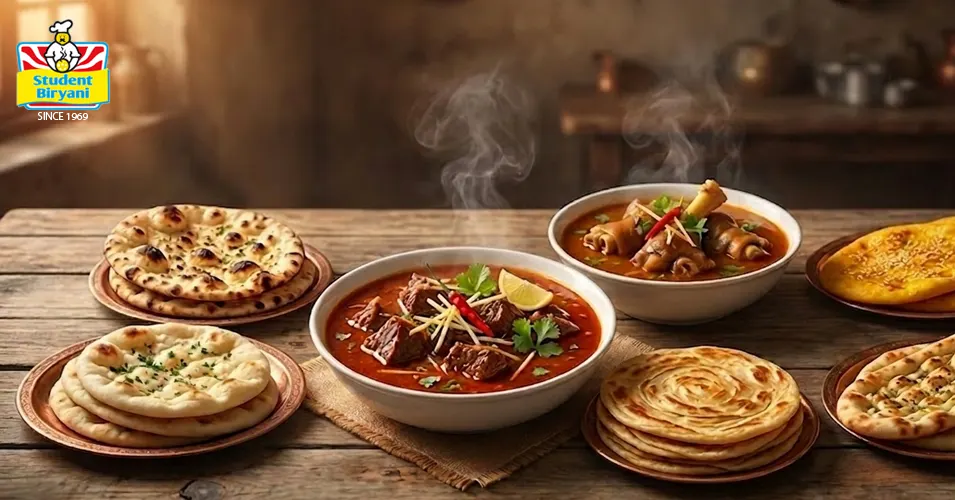
Nihari and Paya both arrive with bread, and the bread tends to arrive without being chosen. It comes because it always comes, the way salt arrives at a table before anyone asks for it. The assumption built into that automatic delivery is that the bread doesn’t particularly matter, that any bread will do the same job against any sauce.
With most dishes, that assumption holds. With Nihari and Paya, it doesn’t.
Both dishes produce sauces that behave differently from a standard curry. The sauce in Nihari coats rather than runs. Paya’s sauce is thinner in appearance but heavier in the way it clings. Bread alongside either of these isn’t a neutral vehicle for getting food from bowl to mouth. It’s the mechanism through which the sauce is actually eaten, and a bread without the right structural integrity against that coating quality changes the ratio of every bite without anyone quite being able to say why the experience feels off.
The bread choice is a functional decision dressed up as a default.
What Makes Nihari Specifically Hard on Bread
Nihari’s sauce develops its character through overnight cooking. Fat renders out of the meat over hours, gelatin converts from collagen and moves through the liquid, and by morning the sauce has a body and a coating weight that shorter cooking cannot produce. What Nihari’s sauce becomes after overnight cooking is the mechanism behind that texture. The practical result at the table is a sauce that adheres to whatever it touches rather than pooling at the bottom of the bowl.
Bread that tears easily fails against this. Roomali roti, thin and pliable, is made for lighter gravies where the sauce flows and the bread folds around it. Against Nihari’s coating sauce it softens too fast, loses structural integrity mid-bite, and leaves the eater managing wet bread rather than eating the dish. The ratio collapses.
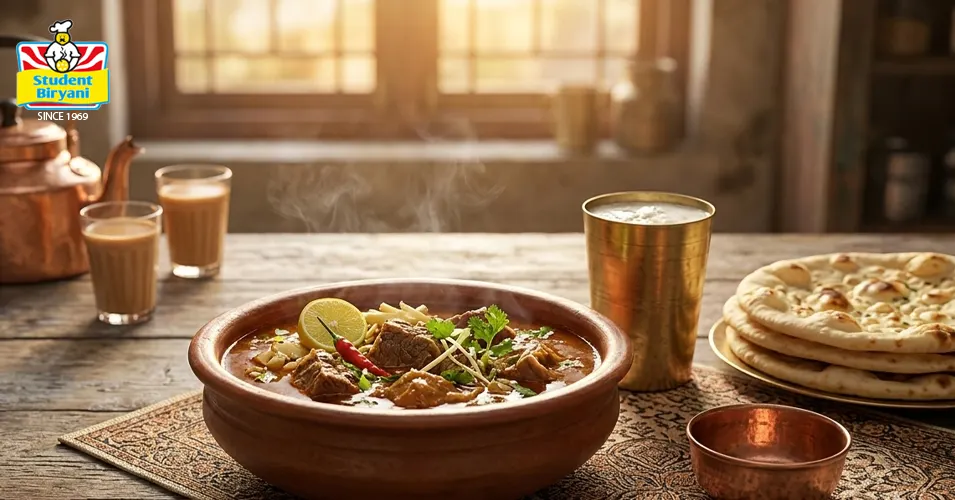
Tandoori naan holds. The crust has enough resistance to stay intact through the dipping and tearing that Nihari demands. The interior is soft enough to absorb without becoming waterlogged immediately. The thickness gives each piece enough body to carry a proper amount of sauce to the mouth without folding or disintegrating before it arrives.
The pairing isn’t preference. The sauce made the decision before the bread arrived.
Paya and Why It Needs Something Different
Paya is made from trotters, slow-cooked until the collagen in the bones and connective tissue dissolves almost entirely into the liquid. Where Nihari’s sauce carries rendered fat and protein alongside the gelatin, Paya’s sauce is built almost purely from collagen breakdown. It looks lighter than Nihari, runs more freely in the bowl, and then coats with an intensity that surprises most people who encounter it for the first time.
The difference between the two sauces is less about weight and more about behavior. Nihari’s sauce stays where it lands. Paya’s sauce moves, then clings. That mobility means the bread needs a different quality from what Nihari demands. The sauce will find its way into whatever surface area the bread offers; the question is whether the bread can hold it there long enough to eat cleanly.
Roti handles this better than tandoori naan does, specifically because of surface texture. Roti’s slightly rougher, drier surface catches and holds Paya’s mobile sauce in a way that naan’s smoother, oiled interior doesn’t. Naan tends to let Paya’s sauce slide rather than grip, which produces a wetter, less controlled bite than the dish deserves. Why dishes built on collagen-heavy cuts produce a different sauce than meat-based slow cooking goes into the structural reason behind that behavior.
Paya eaten with the right roti and Paya eaten with whatever bread arrived are recognizably different experiences. The dish is the same. The bread is not incidental.
The Practical Order
Tandoori naan with Nihari. Roti with Paya. Neither of those pairings requires explanation at the table once you’ve understood why, but both require asking for specifically rather than accepting what arrives automatically.
Quantity matters more than people anticipate. Both sauces deepen toward the bottom of the bowl as the ratio of liquid to solid shifts during eating. The bread that seemed sufficient at the start of the bowl tends to run short by the halfway point, which is where the sauce is actually at its most concentrated and most demanding. Ordering one extra piece of bread per person before the bowl empties is a quieter adjustment than flagging a shortage mid-meal.
Student Biryani serves Nihari prepared through the full overnight process, the sauce arriving with the body and coating weight the dish requires. For anyone ordering it, order Nihari across Dubai, Abu Dhabi, Sharjah, and Ajman branches, and ask for tandoori naan rather than waiting for the default.
How bread functions across a complete Pakistani meal extends this pairing logic further, beyond Nihari and Paya into the broader question of which dishes get eaten with bread, which with rice, and why those aren’t interchangeable decisions.