Finding a Catering Service Is the Easy Part
A search for Pakistani catering in Abu Dhabi returns options quickly. Menus are available, prices are listed, phone numbers are visible. The search part of the problem resolves itself within a few minutes.
What doesn’t resolve as quickly is whether any of those options can actually deliver what a specific event requires.
Most organizers start with three questions: What should we serve? What will it cost? Is the caterer available? Those questions are important, but they do not tell the whole story. The real test comes during the event itself. That is when timing, food quality, and portion planning become impossible to ignore.
Availability answers one question. Suitability answers another.
A caterer can be available, affordable, and able to provide the requested menu while still being the wrong choice for a particular event. This idea appears in both How Office Party Catering Decisions Differ from Full-Service Catering Evaluation and What Corporate Event Catering Requires Beyond Menu and Price, although the challenge extends well beyond office and corporate gatherings.
What Catering Capability Actually Means
Capability in catering is not about how long the menu is or how competitive the pricing is. It is about what the service can reliably do between the moment the order is confirmed and the moment the last person at the event is served.
Food quality across a serving window is the first dimension worth understanding. A catering service that prepares food well and delivers it on time has cleared a low bar. Food quality at the moment of delivery is only part of the equation. A more useful question is whether the food still performs well an hour or two later, when guests are still being served. Food that peaks at arrival and declines quickly across the serving window is a different product from food that holds. Both arrive on time. Only one serves the event well.
Scale is the second dimension. A service that handles a family gathering of thirty competently may not have the logistics, the kitchen output, or the coordination capacity to handle a corporate event of a hundred and fifty with the same reliability. Scale capability is not just about having enough food. It is about whether the preparation, delivery, and serving infrastructure can maintain consistency when the numbers increase significantly.
Logistical communication is the third. A capable catering service understands the event format well enough to make decisions without requiring constant input from the organizer. It knows when to arrive relative to the event start time, how to set up for the serving format, and what to do if something shifts on the day. A service that needs the organizer to manage the catering on top of managing the event has not provided catering. It has delivered food and left the rest of the work behind. How catering requirements shift when the occasion moves from a family birthday to a formal event illustrates how differently those logistical demands land depending on what the event actually is.
Consistency is the fourth dimension and the one most often overlooked before a booking is made. Past performance matters, but context matters too. Catering that works smoothly for a small event may be tested differently by a larger guest list, a more demanding venue, or a schedule that requires precise coordination. Consistency across those variables is what separates a reliable catering partner from one that happened to work well the first time.
What Pakistani Catering in Abu Dhabi Needs to Handle
Abu Dhabi’s catering context creates specific demands that not every Pakistani catering service is built to meet.
The occasion mix is wider here than in most cities. Corporate clients organizing events for international guests sit alongside families planning Eid gatherings for sixty people, alongside businesses running weekly office lunches for mixed professional groups. A catering service in Abu Dhabi encounters all of those occasion types, sometimes within the same week. A service optimized for family-style informal catering may not have the presentation standards or timing precision that a corporate client requires. A service built around corporate events may not have the volume flexibility or informal serving format that a large family gathering needs.
Scale is a genuine variable in Abu Dhabi in a way that matters to catering decisions. Events here frequently run larger than comparable occasions elsewhere. A family gathering that might involve thirty people in another city involves eighty here. A corporate event that would be fifty people in a smaller market is two hundred in Abu Dhabi. A catering service needs to demonstrate that it has handled those numbers before, not that it theoretically could.
Dietary requirements across Abu Dhabi’s population are genuinely varied. A mixed corporate group may include people with halal requirements, vegetarian preferences, and different appetite patterns sitting at the same table. A catering spread that handles that variation without requiring a separate order for each deviation reduces the organizer’s logistical burden significantly. Pakistani catering handles the halal dimension by default, which removes one layer of complexity, but the broader variety still needs to be accounted for in how the spread is structured.
Delivery and setup logistics in Abu Dhabi add their own variables. Distances between areas like Khalidiyah, the Corniche, Reem Island, and the industrial zones mean that arrival timing needs to be planned against traffic and access rather than just kitchen-to-door distance. A delivery to an office tower rarely works the same way as a delivery to a villa compound. Entry procedures, timing expectations, and on-site coordination can be very different. What corporate events require from a catering service beyond food delivery covers the coordination layer in more detail, and those requirements apply with equal force to Abu Dhabi’s corporate catering context.
Matching the Service to the Occasion
The evaluation question is not which Pakistani catering service in Abu Dhabi is the best. It is which one is best suited to what a specific occasion requires.
A family gathering needs volume, variety within the spread, and a serving format that works for an informal setting where people eat across a long window at their own pace. Timing precision matters less than food that holds well and a quantity that doesn’t run short when the group is larger than the confirmed headcount suggested. The evaluation question for this occasion type is whether the service has handled comparable volumes with consistent results.
A corporate event needs something different. Presentation matters. A few minutes rarely matter at a family gathering. At a corporate event, the same delay can interrupt networking, affect the schedule, and create avoidable pressure for organizers. The serving format needs to work for standing guests who are managing a plate and a conversation simultaneously. The evaluation question here is whether the service understands event formats well enough to make decisions without being managed on the day.
A large formal occasion, whether a wedding, a major corporate milestone, or an institutional event, leaves very little room for error. Larger guest counts place additional pressure on food quality, timing, service, and coordination. For that reason, the important question is not whether a catering service can take the booking, but whether it has a proven record of handling events of a similar size and complexity.
The questions worth asking a catering service before booking follow from those occasion-specific requirements rather than from a generic checklist. What is the largest group you have catered for this occasion type? How do you handle a serving window of two hours for a standing event? What happens if the headcount increases by twenty percent on the day? A service that answers those questions with specific experience rather than general assurance is demonstrating capability rather than availability. How the evaluation criteria shift when the occasion is an office party rather than a formal corporate event is worth understanding before those questions get asked, because the criteria themselves change depending on what the event is.
What to Look For, and Where to Start
The evaluation framework this blog has built comes down to one distinction that most catering searches don’t make: available is not the same as capable.
The best catering services make the event feel uncomplicated.
The food remains consistent throughout the serving period. Large guest counts do not create noticeable quality issues. Questions about timing, setup, and service are settled before the event begins rather than during it.Most importantly, the caterer has handled similar occasions before. Experience with comparable events often prevents the problems that first-time providers only discover on the day itself.
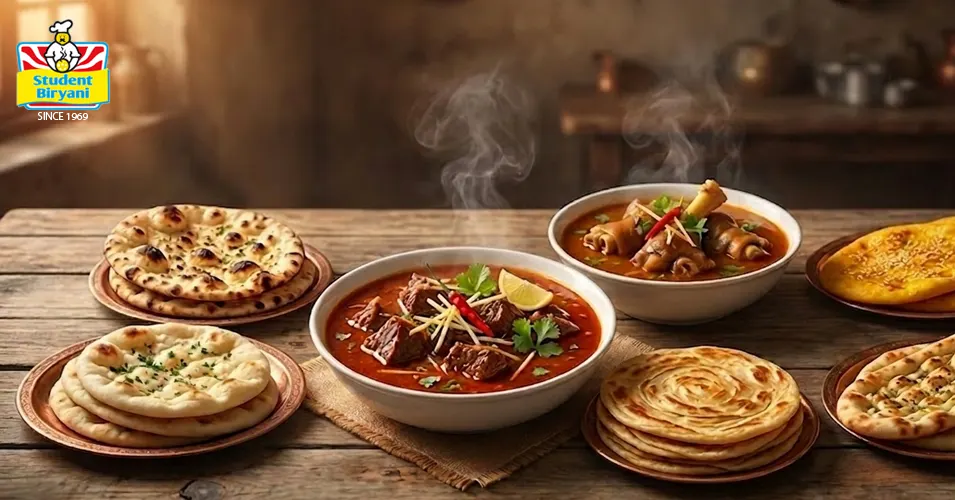
Student Biryani serves catering orders across Abu Dhabi regularly, including gatherings that require food for larger groups. Dishes such as biryani, karahi, and complete Pakistani meal spreads are naturally suited to shared serving, which makes them practical for events where guests are eating together rather than ordering individual meals. The menu accommodates the variety that Abu Dhabi’s mixed occasion types require without needing a separate order for different dietary needs within the same group. For families, the volume and informal serving format are already built into how the food arrives. For corporate clients, the coordination and timing precision have been tested across the scale that Abu Dhabi’s corporate events demand.
Explore Student Biryani’s catering options for the full service picture, or go directly to the Corniche Abu Dhabi branch if the event is based in that area and a location-specific conversation makes more sense than starting with the general catering inquiry.
Availability can secure a booking. Capability becomes visible during the event itself.
Food needs to hold up throughout service, delivery needs to arrive on schedule, and organizers should be free to focus on their guests. Those outcomes are the reason careful catering evaluation matters.