The Choice Looks Simpler Than It Is
Chicken or mutton. The question gets asked at the counter, across the table, in a WhatsApp order thread with six opinions arriving simultaneously. Everyone has a position. Almost nobody can explain it beyond preference, habit, or what they grew up eating.
The position is worth examining. Chicken biryani and mutton biryani share a name, a cooking method, a spice logic, and a format. What they don’t share is the relationship between the meat, the fat, and the rice during dum cooking, and that relationship is what actually determines what arrives on the plate.
How biryani developed into the dish it is today across different Pakistani cities is a longer story, but the chicken versus mutton distinction sits inside that story as a specific structural difference rather than a regional or preferential one. The two versions of the dish are built differently. Understanding how changes what the choice actually means.
How Chicken Builds Its Biryani
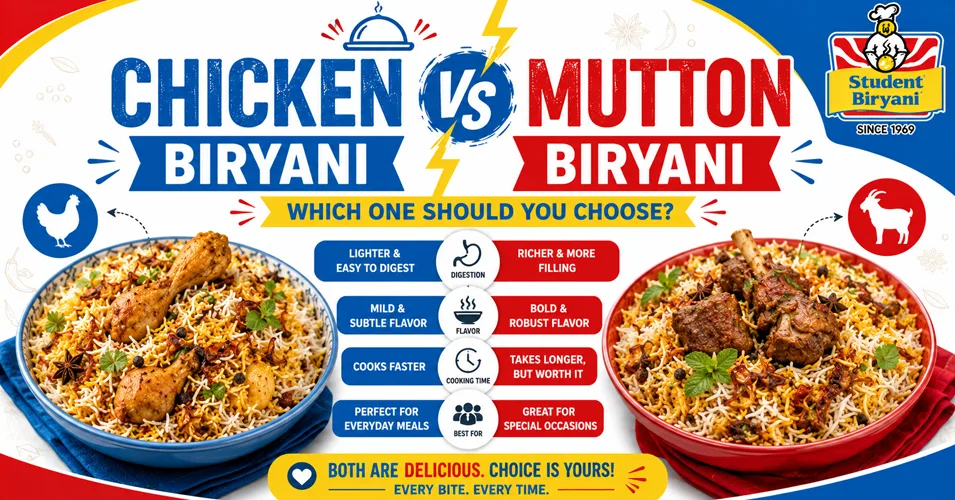
Chicken cooks faster than mutton under dum heat, and that speed is not incidental. It shapes everything about what the dish becomes.
Because the cooking window is shorter, spice contact with the meat stays closer to the surface. The masala works inward to a point and stops there, which produces a flavor profile in the meat that is direct and clearly bounded rather than accumulated throughout. The spice is present and identifiable. It sits on and just below the surface of each piece rather than having had the time to work through the muscle fiber entirely.
Chicken’s fat contribution to the masala and rice is lighter than mutton’s. Less fat renders into the cooking environment during dum, which means the masala retains a cleaner character and the rice absorbs it more independently. How spices behave differently depending on cooking time and fat content during dum explains the mechanism behind this, but the outcome at the table is a biryani where the rice and the meat feel like distinct components rather than two things that have been spending time becoming the same thing.
Neither of those qualities is a flaw. They are the structural outcomes of chicken’s cooking behavior, and they suit certain meals and certain appetites better than mutton’s outcomes do.
How Mutton Changes the Architecture
Mutton needs more time under dum heat, and that time is where the dish’s character develops.
Fat renders out of the meat gradually across a longer cooking window, moving into the masala and then into the rice. Spice that started at the surface of the meat works through it as the fibers soften and open. By the time the pot is ready, the meat, the masala, and the rice have been exchanging fat and flavor long enough that separating their contributions becomes difficult. What fat rendering does to a dish during a longer cooking window is the mechanism. The outcome is a cooking environment that has become progressively richer during cooking rather than reaching a point and holding there.
The rice in a mutton biryani absorbs that progressively richer environment. The masala it carries is not the same masala that went into the pot at the start. It has had mutton fat working through it across the full cooking period, and that changes both the weight of the masala and the way spice reads through it. The flavor arrives more slowly per bite, less bounded, less immediately identifiable, and stays longer.
Calling mutton biryani heavier than chicken biryani is accurate but incomplete. The weight is a cooking outcome, not a seasoning decision. The extra time produced it.
What the Rice Is Actually Telling You
The rice is the most honest part of either biryani. The meat can be assessed on its own terms. The rice cannot, because the rice is a record of everything that happened in the pot around it during dum cooking.
In a chicken biryani, the rice absorbs a masala that hasn’t been significantly altered by fat rendering. The spice signals it carries are relatively clean and independent. Each grain of rice is doing its own flavor work, which is why chicken biryani tends to taste consistent from the first spoonful to the last. The rice and the meat are in conversation, but they haven’t merged.
In a mutton biryani, the rice absorbs a masala that has been progressively enriched by rendering fat across a longer cooking period. How rice carries spice signals differently depending on what surrounds it during dum cooking is the structural reason. The practical result is rice that tastes different at different depths of the pot, different in the first serving versus the third, different at the top of the layer versus where the masala concentrated below. The rice in a mutton biryani is not a consistent experience. It shifts as the serving spoon moves.
Tasting the rice tells you more about which biryani you’re eating than tasting the meat does. The meat reveals the protein. The rice reveals the cooking.
How to Actually Make the Choice
The cooking architecture points toward certain contexts more naturally than others.
Chicken biryani suits a shorter meal, an earlier hour, a smaller appetite, or a solo order where the accumulated weight of mutton fat across a full pot would be more than the meal calls for. The directness of the spice, the cleaner masala, the independent rice character — these are features when the meal doesn’t have the time or the appetite to work through something heavier. A lunch order during a working day, a quick dinner before something else, a single portion eaten at a counter: chicken biryani fits those contexts without asking the meal to become more than it needs to be.
Mutton biryani suits a longer table, a shared meal, an appetite that has room for the accumulated depth to develop across multiple servings. The rice that shifts between the first spoon and the last, the masala that has had the fat and time to become something denser than what went in, the meat that carried the spice through rather than just wearing it: these are features when the meal has the space to be eaten slowly, with other people, across the kind of time that lets the dish actually land.
Student Biryani prepares both versions through the cooking process each one requires. Order chicken biryani or order mutton biryani across Dubai, Abu Dhabi, Sharjah, and Ajman branches. For anyone thinking about biryani as the centerpiece of a larger shared table, why biryani works as the centerpiece of a shared celebration table covers the format logic behind that decision.
Chicken or mutton was never really about the protein. The rice knew that the whole time.