Gajar Ka Halwa gets its distinctive texture from grated carrot cooked down with milk until the mixture becomes dense and cohesive. Its association with winter remains strong, yet Student Biryani currently lists it as a daily dessert.
What Gajar Ka Halwa Is Made From and Why Its Texture Is So Dense
Grated red carrots, seasonal and hand-grated according to Student Biryani’s own description, are cooked down until they release their moisture and take on the concentrated sweetness that defines the dish. Khoya and pure desi ghee go into the reduction as it thickens, the two building the dessert’s richness together rather than as separate layers, khoya lending body and ghee carrying that richness through the carrot itself. Milk is part of the traditional preparation, while khoya adds richness and body as the mixture cooks down..
What that produces is a texture that sits between a pudding and a firm sweet, dense enough to hold its shape on a spoon, soft enough that it doesn’t need cutting. The roasted almond and pistachio garnish on top works against that softness rather than repeating it, a point of crunch and toasted flavor set against an otherwise smooth, spoonable base. Fresh preparation matters here too. A dessert built on a slow reduction is particularly appealing when its warmth and freshly finished texture are still present..
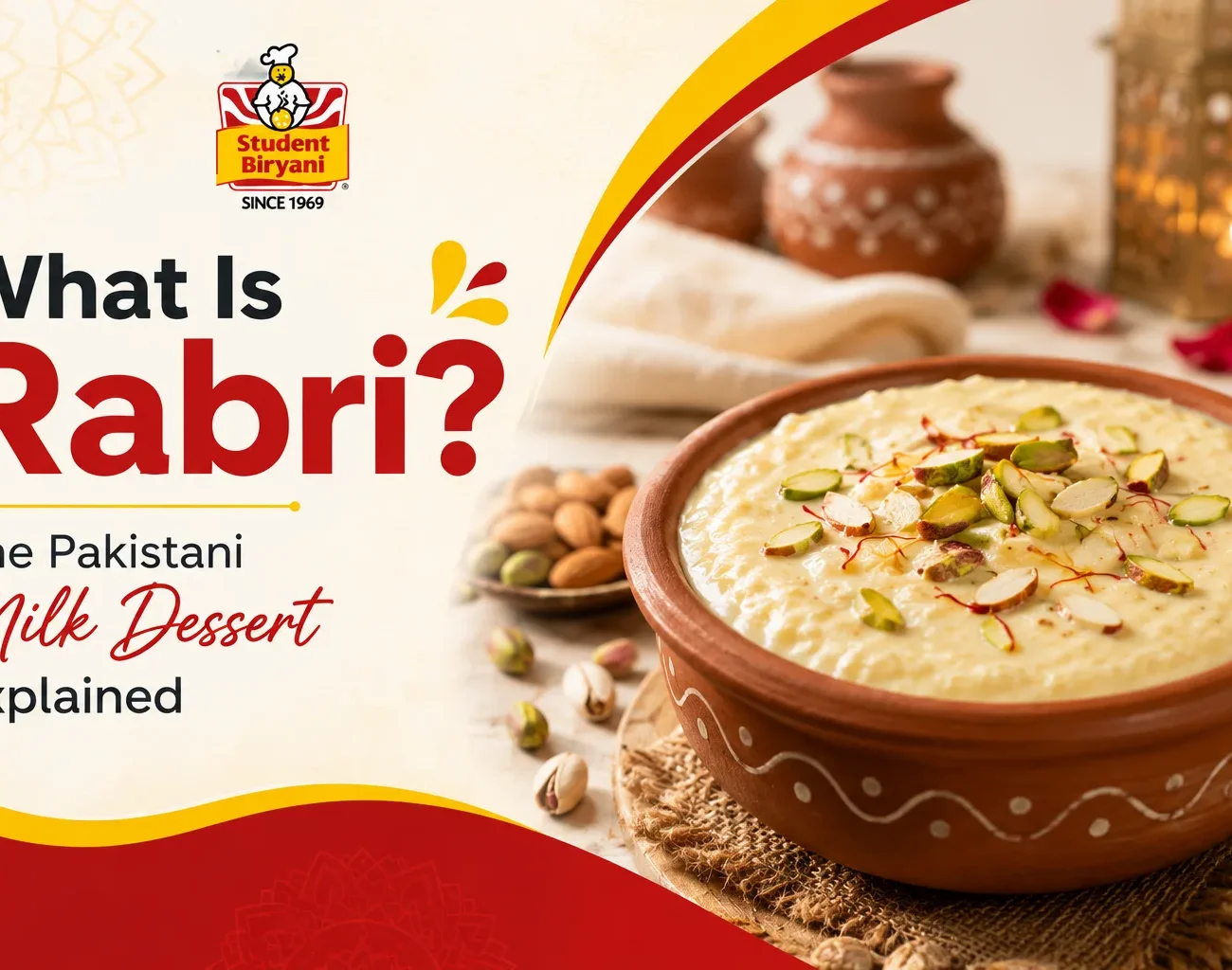
The same reduction principle, a dairy base cooked down until it concentrates, underlies Rabri’s own milk reduction as well, though Rabri works from milk alone rather than milk, khoya, and carrot together.
Why Gajar Ka Halwa Is Associated With Winter
Student Biryani’s own older description of the dish brands it outright as a winter dessert, tying it to nostalgia and the kind of comfort colder months bring. That’s the brand’s own positioning, not an outside assumption layered onto the dish.
The positioning tracks something real beyond marketing language. Red carrots, the variety used in Gajar Ka Halwa, are traditionally a cold-season crop across Pakistan and northern India, part of why a dish built around them settled into a winter identity in the first place. A carrot that’s genuinely in season lines up with an appetite for richer food once the weather turns, and the dessert’s own composition, khoya, ghee, and slow-reduced carrot, sits squarely in that category of rich winter food rather than something light or seasonal-neutral.
Richness is also part of why the dish reads as an occasion dessert in Pakistani food culture rather than an everyday one. Gajar Ka Halwa can turn up on dinner tables, at weddings, and at other winter gatherings where a lighter dessert might otherwise be served, a common pattern rather than a universal one, since not every household or event follows it the same way.
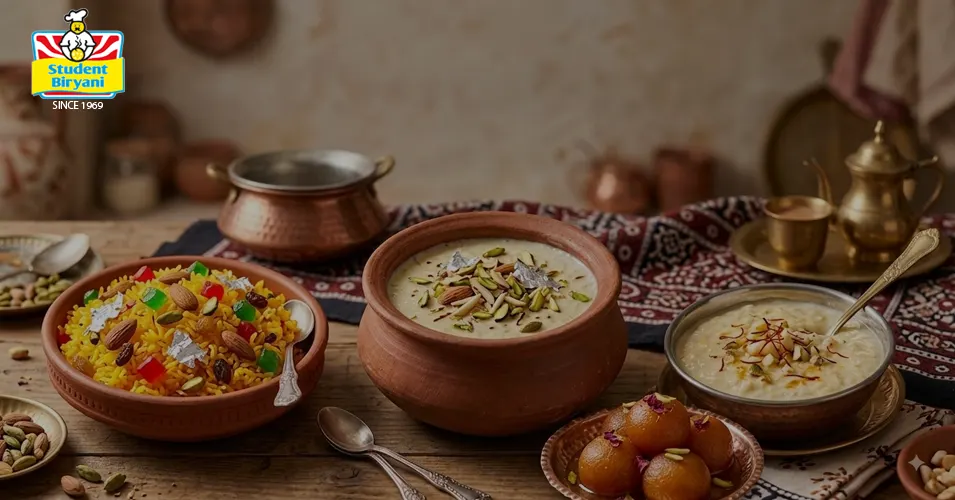
It sits alongside Zarda and Kheer in Pakistan’s broader dessert register, another entry built around richness and occasion.
How Gajar Ka Halwa Fits Into UAE Menus
Student Biryani currently lists Gajar Ka Halwa as a dessert prepared fresh daily, using halal-certified ingredients, sitting in the regular Desserts section of the UAE menu alongside Rabri, Zarda, and Kheer. It isn’t marked seasonal or held back for particular months.
Where to Order Gajar Ka Halwa in the UAE
Gajar Ka Halwa in Dubai and Sharjah is ordered through Student Biryani’s dedicated page for the two cities, with same-day delivery in 30 to 45 minutes from its branches in both.
Family packs are available too, with delivery covering all four cities rather than being limited to single servings, useful for anyone ordering for a full table rather than one plate.
Its place in winter memory hasn’t gone anywhere. It’s just no longer the only time it shows up on the table.