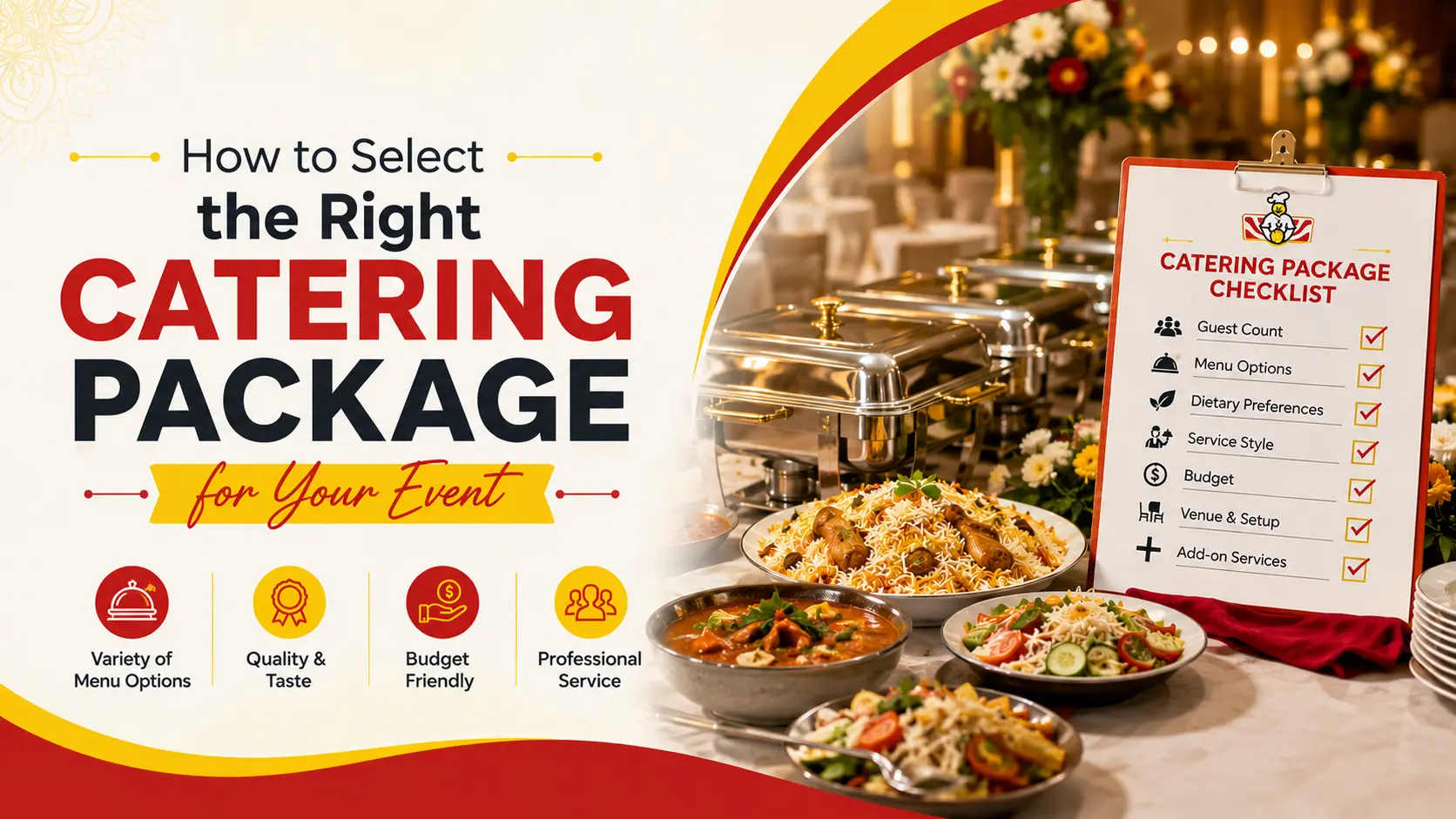
How to Choose the Right Catering Package for Your Event
Most catering decisions begin in the wrong place. Someone gets a shortlist of packages, compares what each one includes, calculates which offers the most coverage at a manageable price, and makes a booking. The logic feels sound. The problem doesn’t appear until the event is underway and something is missing or wrong in a way that no amount of package comparison would have caught, because the comparison was never asking the right question.
Packages are built around assumptions. A catering service designs each package with a specific event type in mind, a rough headcount range, a serving format, a duration. Those assumptions are rarely stated explicitly. They’re embedded in the portion structure, the dish selection, the service format, and the quantity ratios. When the assumptions match the event, everything works. When they don’t, the gap shows up as food that runs short before the evening ends, a serving format that doesn’t suit a standing reception, or a dish variety calibrated for a corporate lunch arriving at a wedding table.
The sequence that produces better outcomes is the reverse of the default one. Define what the event actually requires before looking at what packages offer. Then evaluate packages against that definition rather than against each other.
Why evaluating a catering service’s capability matters more than comparing its packages is the foundation this sits on. The package is the product. The capability is what determines whether the product serves the occasion.
What Your Event Really Requires Before Choosing a Catering Package
Most event organizers know two things before they start looking at catering: how many people are coming and roughly what they want to spend. Both are useful. Neither is sufficient on its own to evaluate a catering package accurately, because the variables that determine whether a package fits an event go considerably further than headcount and budget.
Arrival pattern matters as much as headcount. A hundred guests who arrive within twenty minutes of each other place different demands on a catering operation than a hundred guests who filter in across two hours. The first group needs everything ready simultaneously. The second needs food that holds quality across a window, replenishes without degrading, and suits guests at different stages of hunger depending on when they arrived. A package designed for one pattern will produce problems in the other regardless of how well it was priced.
Duration is the variable that gets underestimated most consistently. A two-hour corporate lunch and a five-hour wedding reception are not the same catering problem at different scales. The food that works across a two-hour window, arriving and being consumed within a defined period, stops working across five hours because the physical properties of most dishes change significantly past the first ninety minutes. Packages built for shorter events have different portion structures and dish selections from packages built for longer ones. Treating them as interchangeable produces a predictable set of problems in the second half of any extended event.
Serving format changes the requirements entirely. A seated dinner, a standing reception, a buffet, a passed-platter service, a hybrid of two of these: each places different demands on the food, the presentation, and the logistics of how the catering service operates on the day. What a wedding specifically requires from catering beyond what a corporate event does is one version of this distinction. What a corporate event requires from its catering format is another. The occasion type carries its own logic, and that logic shows up in what the food needs to do socially and functionally on the night.
Guest profile in the UAE specifically adds a layer that events in other markets don’t always face in the same way. A mixed professional group may span multiple dietary requirements, cultural backgrounds, and appetite ranges across the same table. Articulating that range before the package conversation begins produces a more useful outcome than discovering it as a constraint after the booking is confirmed.
How Catering Packages Are Designed for Different Event Types
A catering package read against its item list tells you what you’ll receive. A package read against its design assumptions tells you what event it was built for, which is the more useful piece of information.
Portion structure is the first signal. A package with large central dishes and modest side portions was designed around a shared-table format where the main dish carries most of the eating weight. A package with equal portions across multiple dishes was designed for individual plate service where guests don’t share. Neither is better. Each suits a different event, and placing the wrong one into the wrong occasion produces friction that the food quality can’t compensate for.
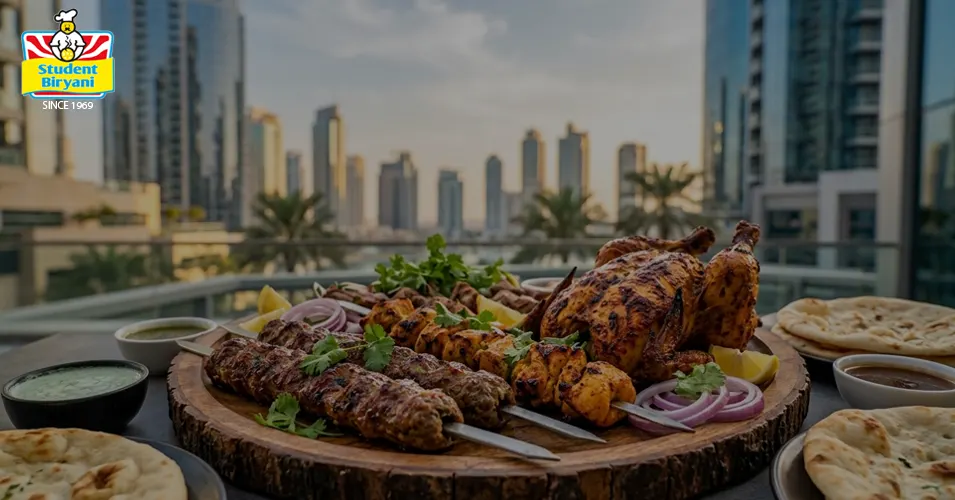
Dish variety signals intended occasion type more directly than most people read it. A package built around biryani, karahi, and a side dish was designed for a working group eating a substantial shared meal. A package that includes seekh kabab, salads, multiple accompaniments, and a rice dish was designed for a more socially extended occasion where eating happens across a longer period and variety serves a social function alongside a nutritional one. The variety isn’t decoration. It’s a signal about what kind of event the package assumed it would be serving.
Duration assumptions sit inside portion quantities in a way that only becomes visible when the event runs longer than the package expected. A package with quantities calibrated for a two-hour consumption window will run noticeably short at the three-hour mark of an event that was always going to run five. The quantities looked sufficient on paper because the paper assumed a different event. How catering package assumptions shift when the occasion is a workplace lunch rather than a formal event describes this gap from one direction. The same logic runs across every occasion type.
The questions worth asking before booking: what event type was this package designed for, what headcount range does it assume, and what serving format does it work best in. A catering service that answers those questions with specifics rather than generalities is telling you something useful about how it thinks about its own products.
How to Match a Catering Package to Your Event Requirements
The matching process has two stages. The first is finding the package whose design assumptions are closest to the event’s actual requirements. The second is understanding what distance remains between the two and whether that distance can be closed through adjustment.
Closest is not the same as perfect. A package designed for a corporate dinner of eighty may not be a precise fit for a birthday celebration of sixty with a longer serving window and a more informal eating format. But if its portion structure, dish variety, and duration assumptions are closer to the event’s requirements than any other available package, it’s the right starting point. The remaining distance, the longer window, the slightly smaller group, the informal format, becomes the conversation about adjustment rather than a reason to start the search again.
Partial alignment is normal. What matters is knowing which gaps can be closed through adjustment and which indicate that the package was designed for a different event category entirely. A quantity adjustment is closeable. A fundamental mismatch in serving format, occasion type, or duration assumption is not something a quantity adjustment resolves.
Over-packaging produces its own set of problems worth naming specifically. Selecting a package designed for a more formal or larger occasion than the event requires doesn’t add quality. It adds food that doesn’t get eaten, a service format that feels disproportionate to the occasion, and a cost that didn’t produce a commensurate improvement. A wedding package brought to a corporate lunch imposes the wrong social register on the occasion regardless of how good the food is.
How the three-layer wedding menu system translates into specific catering package requirements gives the wedding-specific version of this matching logic. The same principle runs across every occasion type: the package needs to match the event’s functional requirements, not exceed them in ways the event has no use for.
Questions to Ask Before Booking a Catering Package
The catering conversation that starts with “what packages do you offer” produces a catalogue. The one that starts with “here is what our event requires” produces a recommendation. The difference between those two openings is the difference between being sold something and being helped to find something.
Bring the event-side variables to the conversation rather than waiting for the catering service to ask about them. The occasion type, the arrival pattern, the serving format, the duration, the guest profile: these are the inputs a catering service needs to make a genuine recommendation rather than defaulting to whichever package gets presented most often. A service that asks about these variables before recommending anything is demonstrating that it understands catering as a matching problem rather than a sales one.
The response to those variables is itself a capability signal. A service that listens to the event brief and then explains which package suits it, and why, and where adjustments might be needed, is showing you how it will behave on the day of the event. A service that responds to a detailed brief by repeating its package list hasn’t processed what you told it. How a catering service’s response to your event brief signals its capability extends this observation into the broader evaluation framework.
Student Biryani’s catering team handles event inquiries across all occasion types and across all four emirates. The conversation starts with the event rather than the catalogue. Explore Student Biryani’s catering options with the event brief ready rather than the budget figure, and the conversation that follows will be more useful than most catering consultations tend to be.
A package selected around event requirements produces a different night from an event fitted around package assumptions. The food may be identical. What it does for the occasion isn’t.