Haleem Looks Like One Thing. It Is Made From Three.
Haleem arrives at the table as a single unified thing. No visible grain, no identifiable pieces of meat, no separate components sitting beside each other. The texture is consistent from the first spoonful to the last. Most people who eat it regularly would struggle to name everything that went into the pot.
That unified appearance is not where Haleem starts. It is where Haleem ends up.
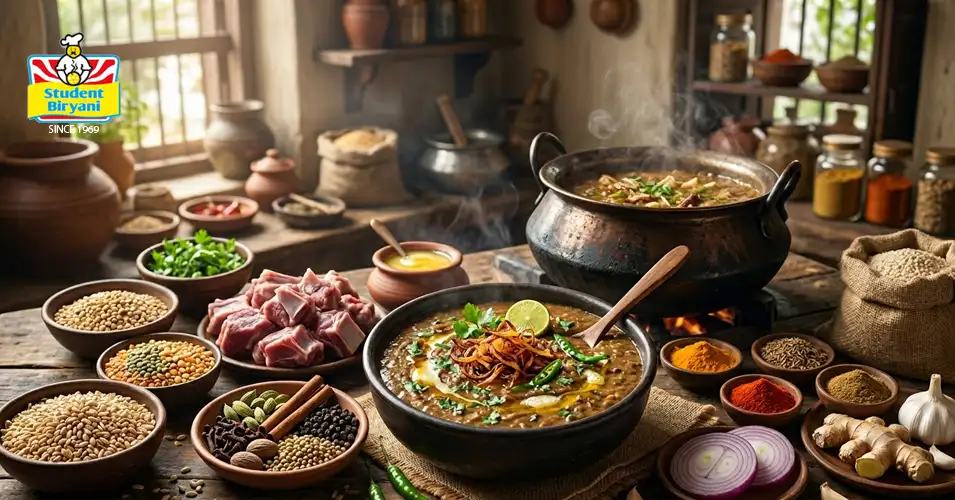
Three distinct ingredient categories go into the pot at the beginning, including meat, grain, and lentils. Each one has its own structure, its own cooking behavior, its own timeline for breaking down under heat. What makes Haleem what it is has nothing to do with any single one of them. It has everything to do with what happens when all three lose their individual identities in the same pot over the same sustained cooking period.
The dish hides its own complexity. Understanding why sustained cooking time changes the structural outcome of a dish is the foundation for understanding why Haleem is built the way it is.
The Meat: What It Contributes Beyond Protein
The cuts used in Haleem are not chosen for convenience or cost. Tougher cuts with significant connective tissue are the correct choice for this dish, not a compromise. They contain two things that Haleem specifically needs: collagen and fat, both of which behave in ways under slow heat that leaner, more tender cuts cannot replicate.
Collagen is connective tissue running through the muscle. Under brief high heat it tightens and stays tough. Under sustained low heat it converts to gelatin, and that gelatin moves into the liquid around it, giving the sauce a body and coating quality that comes from nowhere else in the pot. The full mechanism behind what collagen conversion produces in slow-cooked meat is covered in the slow-cooked foods piece, but the outcome in Haleem is specific: the sauce stops being thin liquid and becomes something that holds its own weight.
The meat fibers themselves break down over the cooking period rather than staying intact. They don’t remain as identifiable pieces in the finished dish. They distribute through it, contributing a fibrous thread-like quality that runs through the texture and keeps the dish from feeling purely starchy. Fat renders out of the meat during cooking, redistributes through the sauce, and carries spice compounds with it into parts of the dish that water alone wouldn’t reach.
Tougher cuts produce all three of those outcomes. A leaner cut produces none of them in the same way.
The Grain: What Wheat Brings That Meat Cannot
Broken wheat is the grain used in Haleem rather than whole wheat, and that distinction matters to how the dish cooks. Broken wheat has more surface area exposed, which means it absorbs liquid faster, swells more quickly, and begins breaking down its own structure earlier in the cooking process than a whole grain would.
As broken wheat cooks slowly in the pot alongside meat and lentils, it absorbs the liquid around it, swells, and then begins to lose its grain identity entirely. The starch inside releases gradually into the surrounding liquid. As the grains soften and break apart, they release starch into the mixture. That’s what gives Haleem its thickness, without needing any separate thickening ingredient.
By the time Haleem is ready, no individual piece of wheat is identifiable in the pot. The grain has contributed its starch to the liquid and its bulk to the overall mass, and then effectively disappeared into the dish. What remains is density, a thickness that holds the dish together in a way that meat and lentils alone would not produce.
That binding quality is specific to grain. Fat adds coating. Gelatin adds body. Starch from broken wheat adds the structural density that makes Haleem sit the way it does rather than running like a soup or sitting like a stew.
The Lentils: Depth Without Dominance
Multiple lentil varieties go into authentic Haleem rather than a single type, and the reason is practical rather than traditional. Different lentils break down at different rates under slow heat. Some dissolve almost completely early in the cooking process. Others hold their shape longer before eventually losing it. Using a combination means the breakdown happens in stages rather than all at once, and each variety contributes something slightly different to the final dish as it goes.
By the time Haleem is finished, no individual lentil is identifiable. They have all broken down and dissolved into the pot. Their contribution is felt in the dish rather than seen in it.
What lentils bring is earthiness, a flavor layer that sits underneath the spice rather than competing with it. The meat contributes its own depth through fat and collagen. The wheat contributes starch and density. Lentils contribute a different kind of body, one that comes from dissolved legume rather than rendered fat or released starch, and a flavor undertone that grounds the dish without announcing itself.
Remove the lentils and the dish loses something that is difficult to name while eating but immediately noticeable in its absence. Haleem without lentils tastes forward rather than grounded. The depth comes from what the lentils become during cooking. In many ways, it reflects how sustained heat changes the structural identity of ingredients over time, turning separate components into part of the same base.
Why the Three Have to Work Together
Meat, wheat, and lentils do not simply coexist in the Haleem pot. They change each other.
Gelatin released from the meat moves through the liquid and coats the starch coming from the wheat. Fat rendered from the meat carries spice compounds into the dissolved lentil mass. The starch from wheat binds with the liquid that the lentils have thickened from below. Each breakdown process affects the environment that the other two are breaking down into. By the end of a full cooking period, the pot contains something that none of the three could have produced separately.
That interaction is why substitution changes Haleem categorically rather than just slightly. A version made with leaner meat produces less gelatin and less rendered fat, so the starch has nothing to coat and the lentils have nothing to carry spice through. A version made with whole wheat instead of broken wheat produces a different starch release timeline that doesn’t align with the breakdown of the other two. Cut the cooking time and the collagen hasn’t converted, the starch hasn’t fully released, and the lentils haven’t dissolved. The result may taste acceptable. It is not structurally Haleem.
Student Biryani prepares Haleem through the full process includes the extended cooking time, the cuts of meat that produce gelatin and rendered fat, the grain and lentil combination that creates the texture the dish is known for. For anyone in the UAE who wants to understand what that process actually produces on the plate, order authentic beef Haleem across Dubai, Abu Dhabi, Sharjah, and Ajman branches.
Haleem looks simple because the cooking erased the evidence of its own complexity. Everything that made it what it is dissolved into the pot and became the dish itself